Can Cats Share a Litter Box? Tips for Multi-Cat Households
If you live in a multi-cat household, you may wonder whether your cats can share a litter box. It can seem convenient to have one shared box, but your cats' personalities and health needs as well as your household dynamics all play into deciding upon the right number of litter boxes .
Some cats tolerate sharing, while others become territorial or stressed. And, frequently used litter boxes require regular scooping and maintenance – possibly more than you can keep up with. Understanding feline behavior and litter box preferences will help you create a setup that works for your household and prevents behavioral issues and environmental nuisances such as odors.
Pro tip: Even if your cats seem comfortable sharing, always provide at least one backup litter box to prevent territorial disputes and ensure access to a clean option.

Quick answer: Can cats share a litter box?
While cats can physically share a litter box, it's not recommended. The standard guideline is one litter box per cat, plus one extra. Shared boxes can lead to territorial disputes, stress, litter box avoidance, and increased disease transmission. Even bonded cats benefit from having multiple boxes in separate locations. Learn more in the article How Many Litter Boxes Do I Need?
Understanding feline territorial behavior
Cats are naturally territorial animals. Even cats that get along well may want their own space for elimination. Sharing a litter box can create stress or conflict, particularly if one cat is more dominant.
Cats communicate through scent marking. A shared litter box becomes a communal scent zone, which can either promote harmony or spark territorial disputes, depending on the cats' relationship and personalities.
Some bonded cats, especially those raised together from kittenhood, may tolerate sharing better than cats introduced later in life. However, tolerance doesn't mean preference, and stress can develop over time, even in established households.
Potential benefits of shared litter boxes
Convenience and space savings
Fewer litter boxes require less floor space, which can be beneficial in small apartments or homes with limited room. This setup also means fewer boxes to clean and maintain.
Reduced costs
Sharing boxes can reduce expenses related to litter, liners, and odor control products. Households need fewer supplies when maintaining fewer boxes.
Automatic litter boxes for shared use
Self-cleaning litter boxes can make sharing more feasible by removing waste after each use. These systems help maintain cleanliness between manual scoopings, reducing odor and making the box more appealing for subsequent users.
However, even with automatic boxes, the one-per-cat-plus-one-litter-box rule remains the recommended standard for optimal cat health and behavior.
Risks and drawbacks of shared litter boxes
Behavioral problems and litter box avoidance
Shared boxes can lead to elimination outside the box if one cat feels uncomfortable, threatened, or finds the box too soiled. Territorial cats may guard the box, preventing other cats from accessing it.
Litter box avoidance often manifests as urinating or defecating on carpet, furniture, or other inappropriate locations. Once this behavior starts, it can be difficult to reverse.
More frequent scooping required
A shared litter box generally needs to be scooped twice as often as multiple litter boxes that are used less frequently. A single, shared box may can need to have its litter cleaned multiple times a day, which may not be sustainable.
Increased disease transmission
Shared litter boxes create higher risk for spreading illness. Urinary tract infections, parasites, and digestive issues can transmit more easily when multiple cats use the same box.
Health monitoring also becomes more difficult with shared boxes, as you cannot easily identify which cat is having elimination issues or changes in bathroom habits.
Stress and territorial disputes
Even cats that appear to tolerate sharing may experience chronic low-level stress that affects their overall wellbeing. Stress can manifest as behavioral changes, aggression, or health problems over time.
Dominant cats may claim the box as their territory, forcing subordinate cats to hold their waste longer than healthy or seek alternative elimination sites.
Factors that influence litter box sharing success
Number of cats in the household
The more cats you have, the more boxes you need. Follow the one box per cat, plus one extra rule. For example, three cats should have four litter boxes minimum.
Multiple boxes provide options and reduce competition, even if some cats occasionally use the same box.
Litter box size and type
Larger litter boxes can accommodate bigger cats and provide more space, but size alone doesn't make sharing appropriate. Your cats will decide whether or not they want to share.
Self-cleaning litter boxes often feature spacious interiors and automatic self-cleaning cycles, which can help maintain cleanliness in multi-cat households. However, a self-cleaning litter box is a single litter box and should be counted as such when you tally up the recommended number of boxes for your home.
Cat personality and relationship dynamics
Social, easygoing cats may tolerate sharing better than territorial or anxious cats. Observe whether your cats compete for food, sleeping spots, or other resources, since this competition often extends to litter box use.
Bonded cats raised together from kittenhood typically share more successfully than adult cats introduced later, though individual personalities vary significantly.
Health and hygiene considerations
Cats with urinary tract infections, digestive issues, or other health conditions should have dedicated litter boxes to prevent disease transmission and allow for health monitoring.
Senior cats or those with mobility issues may need boxes in specific locations that other cats shouldn't monopolize.
Best practices for multi-cat litter box setups
Choosing appropriate litter boxes
Select boxes that are at least one and a half times the length of your largest cat. Ensure adequate depth to contain litter while remaining easy to enter and exit.
Open boxes provide easy access and better ventilation, though they may scatter more litter. Covered boxes can trap odors and make some cats feel confined. Top-entry boxes reduce litter tracking but aren't suitable for senior or mobility-impaired cats.
Automatic self-cleaning litter boxes offer convenience but should be used in relationship to the recommended number of boxes.
Strategic box placement
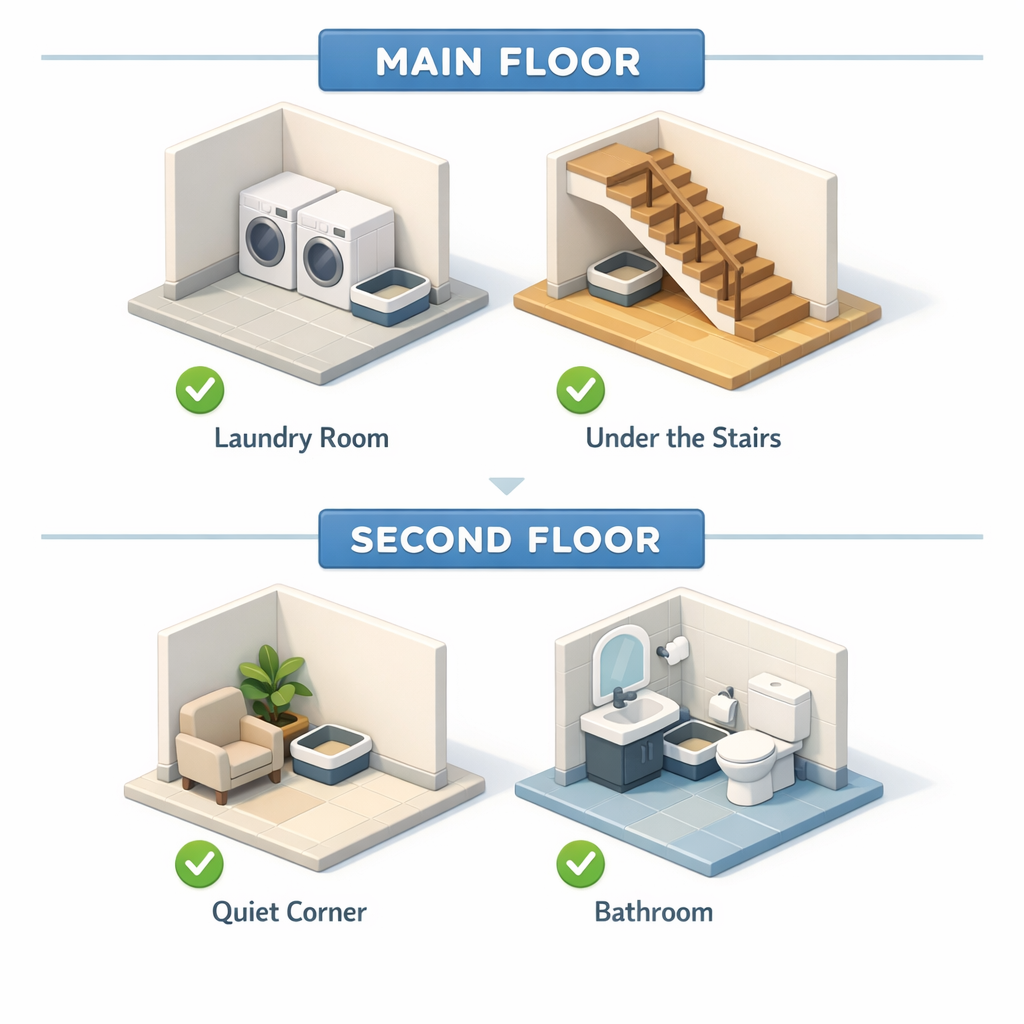
Distribute litter boxes across different rooms or floors rather than clustering them in one area. Cats may view clustered boxes as a single territory.
Choose quiet, low-traffic areas with good ventilation. Avoid placing boxes near food and water bowls, loud appliances, or busy hallways.
For multi-level homes, place at least one box on each floor to ensure accessibility for all cats. You can find more guidance in the article Where to Put a Litter Box.
Maintenance and cleaning schedule
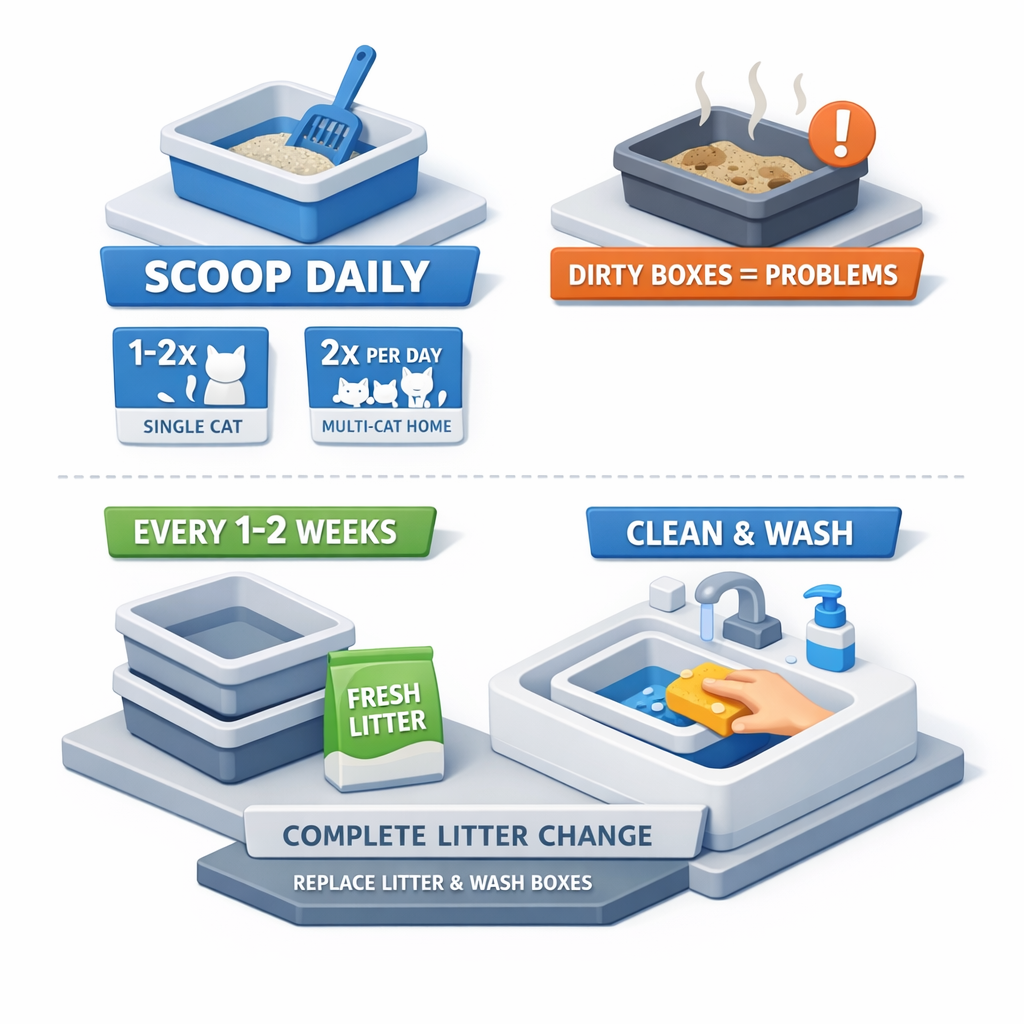
Scoop all litter boxes at least once daily – twice daily for heavily used boxes in multi-cat households. Dirty boxes are a primary reason cats avoid them or eliminate elsewhere.
Perform complete litter changes every one to two weeks for clumping litter with multiple cats. Wash boxes with mild soap and water during each complete change.
Automatic litter boxes still require regular maintenance, including emptying waste compartments and cleaning sensors or mechanical components according to manufacturer instructions.
Selecting appropriate litter
Clumping litter simplifies scooping and odor control. Most cats prefer unscented varieties, as fragrances can be overwhelming to their sensitive noses.
Maintain consistency in litter type across all boxes in your home. Sudden changes can cause litter box avoidance.
Check automatic litter box manuals for compatible litter types, as some models work best with specific textures or formulas.
Signs of litter box problems in multi-cat homes
Behavioral indicators
Watch for elimination outside the box, excessive digging, vocalizing near the box, or complete avoidance. These behaviors indicate stress or dissatisfaction with the current setup.
One cat blocking another from accessing the box or lingering near it without eliminating are signs of territorial disputes.
Territorial conflicts
Aggressive behavior near litter boxes, including hissing, swatting, or chasing, can indicate territorial disputes. Guarding behavior where one cat prevents others from approaching the box requires intervention.
Submissive cats may begin hiding, showing anxiety, or developing stress-related health issues.
Solutions for litter box sharing problems
Adding additional boxes
If cats show signs of stress or avoidance, immediately add more boxes in different locations. Distribute them across separate rooms to reduce territorial conflicts.
Ensure new boxes are easily accessible and placed in quiet, private areas. To help your cats adjust to a new box, use the same litter type and depth, even if the box itself is different. For example, you may add a self-cleaning litter box to your lineup but you’ll want to also keep your old basic litter box, too.
Addressing behavioral issues
If problems persist despite adequate boxes, consult your veterinarian to rule out medical causes. A veterinary behaviorist can help identify stress triggers and develop solutions.
Stress, household changes, new pets, or environmental factors can all affect litter box behavior. Professional guidance helps create an effective intervention plan.
Environmental modifications
Consider using feline pheromone diffusers near litter box areas to reduce anxiety and promote calm behavior. Ensure each cat has separate resources including food bowls, water stations, and resting areas.
Creating a generally low-stress environment supports better litter box habits across the household.
Expert recommendations
The commonly accepted starting place for litter box quantity is one box per cat, plus one extra. This ratio is often cited as best for preventing behavioral and health issues. This standard applies regardless of whether cats appear to tolerate sharing.
Regular cleaning and monitoring for changes in elimination habits are essential for early detection of health problems. Self-cleaning litter boxes can make it so you don’t have to clean litter as often, but an automatic litter box only counts as one litter box, so adding one may not reduce your overall box quantity.
Cat behaviorists emphasize the importance of territory, routine, and reducing resource competition. They recommend observing cat interactions and adjusting setups based on individual household dynamics rather than convenience alone.
Frequently asked questions
How many cats can safely use one litter box?
While cats can physically share one box, it's not recommended. Follow the “one box per cat, plus one extra” rule for a healthy and happy multi-cat household. For example, two cats should have three boxes minimum. This prevents stress, territorial disputes, and ensures access to clean options.
What if my cats refuse to share a litter box?
If cats avoid the box or show signs of stress, add more boxes in different locations. Provide each cat with accessible options and monitor their behavior. Even automatic self-cleaning litter boxes cannot compensate for insufficient box quantity if cats are incompatible with sharing.
Can bonded cats share a litter box?
Even bonded cats benefit from having multiple boxes available. While they may tolerate sharing better than unrelated cats, providing options reduces stress and prevents problems if their relationship dynamics change or health issues develop.
Are automatic litter boxes better for multi-cat households?
Automatic litter boxes help maintain cleanliness between manual scoopings, which can benefit multi-cat households. Your cats may be more inclined to share a self-cleaning litter box, and you will not have to clean the litter yourself with the same frequency a traditional litter box requires. However, they don't eliminate the need for multiple boxes. Use them as part of a complete litter box system.
What are signs that cats are stressed about sharing a litter box?
Signs include elimination outside the box, one cat guarding the box, excessive waiting to use the box, increased aggression between cats, anxiety behaviors, and changes in elimination patterns. Any of these warrant adding more boxes immediately.