How to Clean Baseboards – Including Tips for Cleaning Without Bending Over
Key takeaways
- Regular vacuuming with a crevice tool and dusting brush is the most effective baseboard maintenance habit – do it often enough and wet cleaning becomes a rare job rather than a regular chore.
- The PowerClean® DualBrush Cordless Stick Vacuum's extension wand and built-in crevice tool let you vacuum baseboards standing upright – attach the crevice tool, pull down the dusting brush for a soft touch, and work the full length of the baseboard without bending.
- Before wet cleaning, identify your baseboard finish – matte and flat paint require minimal moisture and a very light touch; satin and semi-gloss are more forgiving; stained wood needs a wood-safe cleaner, not water.
- After cleaning baseboards, vacuum the floor – dust and debris fall during baseboard cleaning and the DualBrush picks it all up in one pass.
Jump to cleaning instructions
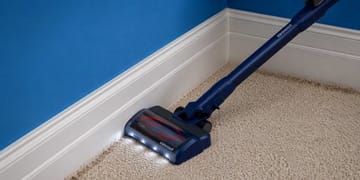
Baseboards are one of those surfaces that nobody thinks about until they notice them, or a particular houseguest mentions them. Then, the dirt is all you see when you walk into the room. That gray film along the base of every wall, the pet hair collected in the corner where the baseboard meets the floor, the smudges that accumulate near doorways – none of it is challenging to address, but it does require the right approach and regularly addressing the issue so it doesn’t build up.
This guide, assembled by the cleaning experts at BISSELL, covers how to keep baseboards clean with minimal effort using a cordless stick vacuum – so you can save your knees and back – and how to wet clean them when vacuuming isn't quite enough.
Pro tip: Regularly vacuuming dust and debris off your baseboards will reduce the need to deep clean them.
Why baseboards get dirty – and why regular maintenance matters
Baseboards sit at floor level, which puts them directly in the path of everything that moves through a room. Dust settles on the horizontal top edge. Pet hair drifts along the floor and collects against the baseboard face. Shoes scuff the lower portion. In rooms with carpet, the junction between the baseboard and the carpet edge traps debris that a standard vacuum can't reach. In rooms with hard floors, that same junction collects fine dust and tracked-in grit.
Left alone, this debris accumulates into a layer that requires scrubbing to remove. If it’s addressed regularly with a vacuum, it never gets the chance to bond to the surface – and wet cleaning becomes an occasional task rather than a necessary one.
What you'll need
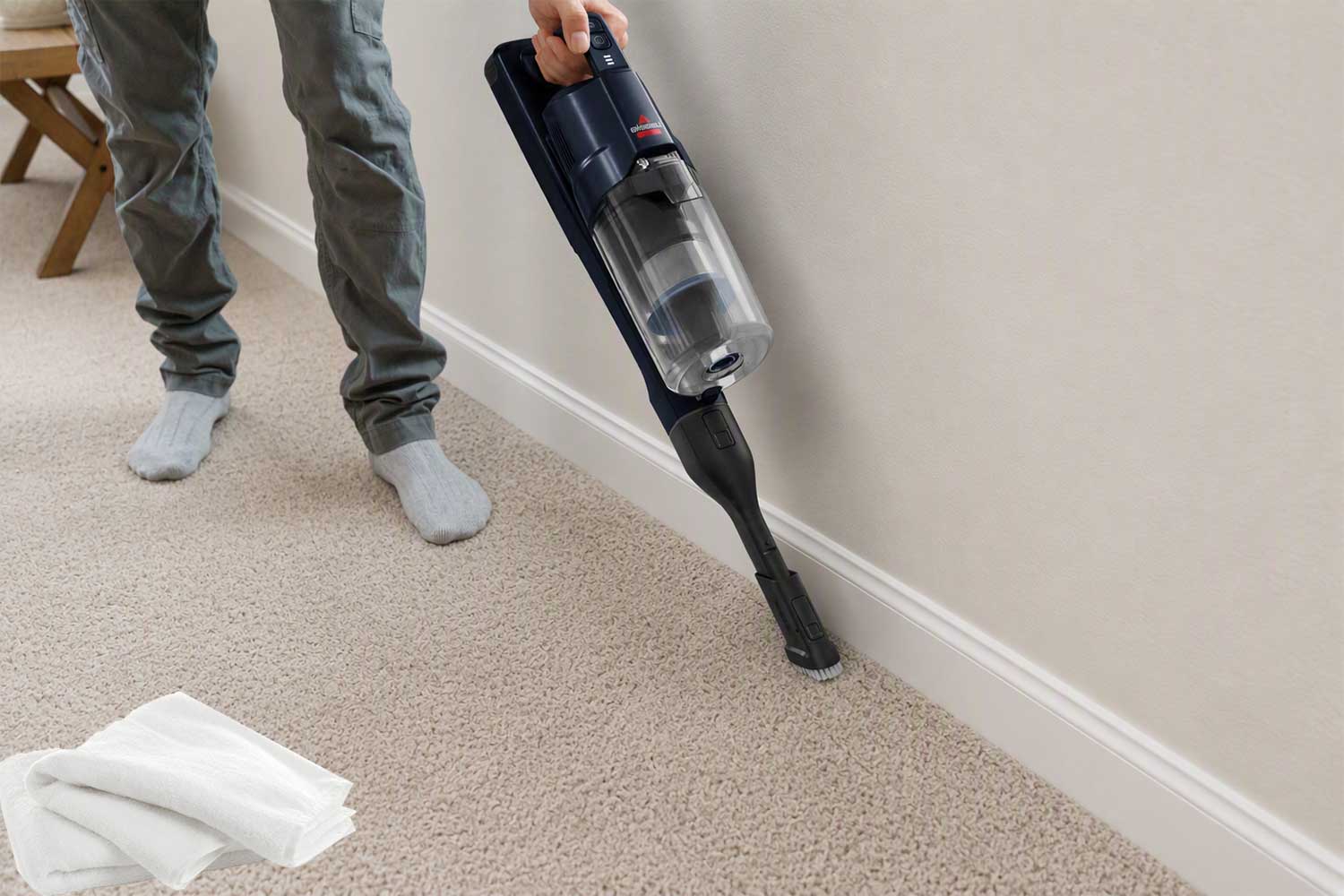
- PowerClean® DualBrush Cordless Stick Vacuum – with extension wand and Crevice Tool; dusting brush pulled down for soft touch on painted surfaces
- A clean cloth – for wet cleaning when needed
- Water or a cleaning solution appropriate for your baseboard finish type (see finish guide below)
- A broom handle or similar – optional, for attaching a damp cloth if bending is difficult
How to vacuum baseboards – the regular maintenance step
Regular vacuuming of the boards is the single most effective baseboard maintenance habit. When done as part of your normal floor cleaning routine – or every other week – it prevents the buildup that makes wet cleaning necessary.
Using the extension wand and Crevice Tool while standing up
The PowerClean® DualBrush Cordless stick vacuum operates as a full stick vacuum, a hand vacuum, or an extended-reach tool. For cleaning baseboards, remove the foot of the machine and attach the Crevice Tool to the end of the Extension Wand. Pull the dusting brush down for a soft touch against painted or stained surfaces.
Use Eco Mode for baseboard vacuuming – the gentler suction is best for dust removal on painted surfaces and preserves battery life. AutoAdapt mode works well too, automatically adjusting suction based on the debris it detects.
Work along the full length of each baseboard in slow, deliberate passes. Pay particular attention to the top edge where dust settles, the face of the baseboard where pet hair clings, and the junction at the floor where debris accumulates.
Switching to hand vacuum mode for intricate molding
For baseboards with detailed profiles – curved ogee molding, decorative carved details, recessed panels – the extension wand may not reach into every groove. Power off, remove the wand, and use the hand vacuum with the crevice tool directly for close, controlled cleaning of intricate areas. A cotton swab or small soft brush handles the tightest corners that even the Crevice Tool can't reach.
Vacuum the floor after
Once the baseboards are vacuumed, run the PowerClean® DualBrush Cordless Stick Vacuum over the adjacent floor. Dust and pet hair dislodged from the baseboards during cleaning settles on the floor. The DualBrush Technology and FurFinder™ Headlights make quick work of that dropped dirt on both carpet and hard floors. Keep this in mind when you start vacuuming: baseboards first, floors second.
Pro tip: Clean baseboards after dusting furniture and ceiling fans, not before. Dust disturbed from above settles easily on baseboards – clean them at the end of a dusting session so you’re completely removing dust and dirt from the room.
Baseboard finish and material considerations
Before wet cleaning, identify your baseboard finish. The wrong cleaning approach for the finish type can damage the surface or leave streaks.
Satin and semi-gloss paint
This is the most common baseboard finish and the most forgiving to clean. Satin and semi-gloss hold up well to a lightly damp cloth and a small amount of mild cleaning solution. Wipe with the grain of any wood texture and dry with a new clean cloth immediately – leaving moisture on painted wood can cause swelling or peeling over time.
Matte and flat paint
These types of baseboards are more porous than those with a satin or gloss finish and more easily damaged by moisture and friction. Use as little liquid as possible – the cloth should be barely damp – and avoid scrubbing, which can lift the flat paint from the surface. Light, single-pass wiping is the preferred technique. If a mark doesn't come off with a light wipe, it may require touching up with paint rather than aggressive cleaning.
High-gloss paint
Shows smears and wipe marks clearly. Use a clean cloth with minimal solution and wipe with the grain in one direction rather than circular motions. Buff lightly with a dry cloth immediately after wiping to prevent streaking.
Stained or natural wood
Water-based cleaning solutions are not appropriate for unfinished or stained wood baseboards – moisture can raise the grain, cause discoloration, or lift the stain. Check your manufacturer’s cleaning instructions. Use a cleaner specifically formulated for wood surfaces, applied sparingly with a soft cloth. Wipe with the grain and dry immediately with a clean cloth.
MDF (medium-density fiberboard)
Many modern baseboards are MDF rather than solid wood. MDF is particularly sensitive to moisture – water that penetrates the surface causes swelling that can't be reversed. Keep the cloth barely damp and dry immediately after wiping it clean.
How to wet clean baseboards – when vacuuming isn't enough
Even with regular vacuuming, baseboards near high-traffic areas, doorways, and pet zones eventually accumulate grime that doesn't vacuum away. A periodic wet clean – every other month or quarterly for most households – addresses what dry cleaning can't.
How damp is damp enough?
The cloth should feel barely damp to the touch – not wet, not dripping. Excess moisture is the most common mistake in baseboard cleaning. It can damage paint, swell wood and MDF, and leave water marks at the baseboard-floor junction. Wring the cloth thoroughly before use.
The bend-and-wipe technique
Dampen a clean white cloth with a few drops of water or a small amount of cleaning solution appropriate for your finish type (see finish guide above). Work along the baseboard in sections – wipe the top edge first, then the face, then the lower edge where it meets the floor or carpet. Use a dry cloth to follow immediately and remove any remaining moisture. For stubborn marks, apply slightly more pressure but avoid scrubbing on matte or flat finishes.
The broom handle technique for bad backs
If bending is difficult, wrap a barely damp cloth around the end of a broom handle or similar long handle and secure it with a rubber band. Work along the baseboard standing upright using the same top-to-bottom sequence – top edge, face, lower edge. This is less precise than hand wiping for detailed molding but effective for flat and simple profiles, and significantly easier on the back. You can also try a slightly damp mop head, though you may get dripping depending on the model.
Baseboard profile considerations
Flat and square profiles
The simplest baseboard profile is often one flat face, a square top edge, and a square bottom edge. It’s easy to vacuum in a single pass with the Crevice Tool and wipe clean with one stroke of a cloth. This is the most common profile baseboard in modern construction.
Curved and ogee profiles
Curved profiles have a concave or convex face that collects dust in the transitions between flat and curved sections. The Crevice Tool with the dusting brush pulled down gets into these curves better than a flat cloth. For wet cleaning, use a cloth folded to match the curve rather than wiping flat across it.
Intricate and decorative molding
Older homes and formal rooms often have highly detailed baseboard profiles with multiple layers of molding, carved details, or recessed panels. They’re beautiful to look at but, these require a hand vacuum mode with the Crevice Tool for controlled cleaning, and a cotton swab or small soft brush for tight corners that the tool can't reach. Wet cleaning intricate molding requires patience – use a small cloth or cotton swab to work the solution into and out of each detail rather than wiping across the full face.
Rooms with carpet vs. hard floors
The baseboard vacuuming technique is the same regardless of floor type – extension wand, Crevice Tool with dusting brush, Eco or AutoAdapt mode.
The floor cleaning pass after differs:
- Carpet: Use the PowerClean® DualBrush Cordless Stick Vacuum in AutoAdapt mode – it automatically adjusts suction for carpet pile and the DualBrush Technology lifts fallen dust and pet hair effectively.
- Hard floors: Use Eco or AutoAdapt mode; the FurFinder™ Headlights reveal fine dust along the baseboard edge that's easy to miss on hard surfaces.
- In rooms where carpet meets a hard floor at a threshold, vacuum the baseboard junction on both sides.
How to keep baseboards cleaner longer
- Vacuum baseboards as part of your regular floor cleaning routine – if you're already planning to run the stick vacuum, the extension wand and Crevice Tool add only a few minutes to clean the baseboards in the same session.
- Clean top to bottom, always – dust furniture and ceiling fans before baseboards, then vacuum baseboards before floors. This sequence ensures falling dust is always captured in the next step rather than recontamination of a surface you've already cleaned.
- Address pet hair proactively – in homes with pets, the baseboard-floor junction is a primary collection point for fur. Vacuuming this junction every time you vacuum the floor prevents the matted accumulation that requires wet cleaning to remove.
FAQs
How often should you clean baseboards?
Vacuum baseboards every two weeks or so as part of your regular floor cleaning routine – this prevents dust and pet hair from accumulating into a layer that requires wet cleaning. Wet clean every two to three months under typical conditions, or more frequently in high-traffic areas, rooms with pets, or near doorways where scuffs and grime collect faster.
How do you clean baseboards without bending over?
Use the PowerClean® DualBrush Cordless Stick Vacuum with the extension wand attached – the built-in Crevice Tool at the end of the wand reaches baseboards at floor level while you stand upright. For wet cleaning, wrap a barely damp cloth around a broom handle and secure with a rubber band. Both techniques cover the full length of a baseboard without bending. Your knees and back will thank you.
What is the best way to clean painted baseboards?
Vacuum first with a Crevice Tool and soft dusting brush to remove loose dust and debris. For wet cleaning, use a barely damp cloth – the moisture level matters more than the cleaning solution. Satin and semi-gloss paint tolerates a small amount of mild cleaning solution; matte and flat paint requires minimal moisture and no scrubbing. Always dry immediately after wiping.
How do you clean intricate or decorative baseboards?
Switch the PowerClean® DualBrush Cordless Stick Vacuum to hand vacuum mode and use the Crevice Tool directly for controlled cleaning of detailed profiles. For the tightest corners and carved details, a cotton swab or small soft brush reaches where the Crevice Tool can't. For wet cleaning, use a small folded cloth or cotton swab to work into each detail rather than wiping across the full face.
Can you use a steam cleaner on baseboards?
No – steam is not appropriate for wood, MDF, or painted baseboard surfaces. The heat and moisture from steam can raise wood grain, swell MDF, and lift or bubble paint. A barely damp cloth is the correct approach for wet cleaning baseboards.
How do you clean baseboards in a room with carpet?
The technique is the same as any room – extension wand and Crevice Tool for the baseboard, then vacuum the floor after. In carpeted rooms, pay particular attention to the junction where the baseboard meets the carpet edge, where debris accumulates and a standard vacuum foot can't reach. The built-in Crevice Tool on the extension wand is ideal for this junction.
This is a carousel. Use the Next and Previous buttons to navigate between slides.
This is a carousel. Use the Next and Previous buttons to navigate between slides, or use the scrollbar to scroll through content.