How to Clean Shower Tile and Grout: Removing soap scum, mildew stains, and grime
Keeping clean isn’t easy for shower tile and grout.
The inside of your shower is regularly exposed to moisture, soap, shampoo, and body oils, making it a prime spot for grime to collect. Over time, this buildup can lead to discoloration, mildew stains, and even mold. However, with the right cleaning tools and techniques, you can keep your bathroom fresh.
“The Steam Shot™ OmniReach™ Handheld Steam Cleaner makes scrubbing showers and tile far easier than using hot water alone,” says Sean Grant, a BISSELL® test engineer who led hands on validation and performance testing for the device. “The burst of steam penetrates pores in grout and tile where soap scum, hard-water deposits, and mildew build up, releasing powerful heat as it condenses to loosen grime.
“When combined with gentle brushing or a microfiber cloth, the loosened residue lifts away quickly without harsh scrubbing,” he says. “Because you’re using only water, it’s safe to clean in a small enclosed space without the smell or irritation of chemical cleaners.”
In this guide, learn expert-approved tips for cleaning different types of shower tiles and grout.
Pro Tip: The BISSELL® Steam Shot™ OmniReach™ hand held cleaner comes with a variety of scrubbing brush heads, making it ideal for steam-cleaning sealed tile and grout and designating different brushes for different spaces or tasks.
Jump to cleaning instructions
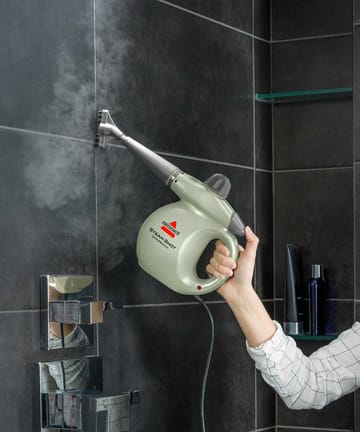
What’s behind shower tile and grout buildup
If your shower surface feels a little sticky or gritty, soap scum may be to blame. Soap scum is typically considered to be a mix of soap residue, body oils, and minerals from tap water. It clings to tile surfaces and grout lines, creating a dull film that’s tough to remove without scrubbing.
In addition to dulling your shower finish, soap scum can attract mildew and mold. These tiny living organisms thrive in damp environments, especially porous ones such as grout.
A handheld steamer is one of the most effective ways to clean a shower made of non-porous tiles and sanded or unsanded grout. Spraying steam onto your shower’s tile and grout will loosen soap scum and sanitize the surface without the need for chemicals. For example, the Steam Shot™ OmniReach™ portable hand steamer has been shown to kill 99.9% of germs1 and bacteria1 on sealed hard surfaces.
Steam may not be safe for use on sensitive surfaces such as marble or limestone. Consider using pH-neutral cleaners for those.
How to clean shower tiles
Method 1: Steam and scrub sealed, non-porous tiles
Steam loosens grime and kills bacteria, while scrubbing lifts away residue. The Steam Shot™ OmniReach™ portable hand steamer comes with several different scrub brush attachments for the steam nozzle, making it simple to scrub while you steam.
Materials needed
- The Steam Shot™ OmniReach™ portable hand steamer and a round scrub brush
- Handheld shower sprayer
ofor bucket of warm water - Microfiber cloth
Safe for sealed, non-porous tiles made of:
- Ceramic
- Porcelain
- Glass
- Sealed quartz
- Sealed slate
Not recommended for tiles made of:
- Saltillo
- Terracotta
- Travertine
- Marble
- Limestone
Step 1: Prep the shower
Clear the shower of toiletries and rinse tiles with warm water to soften buildup.
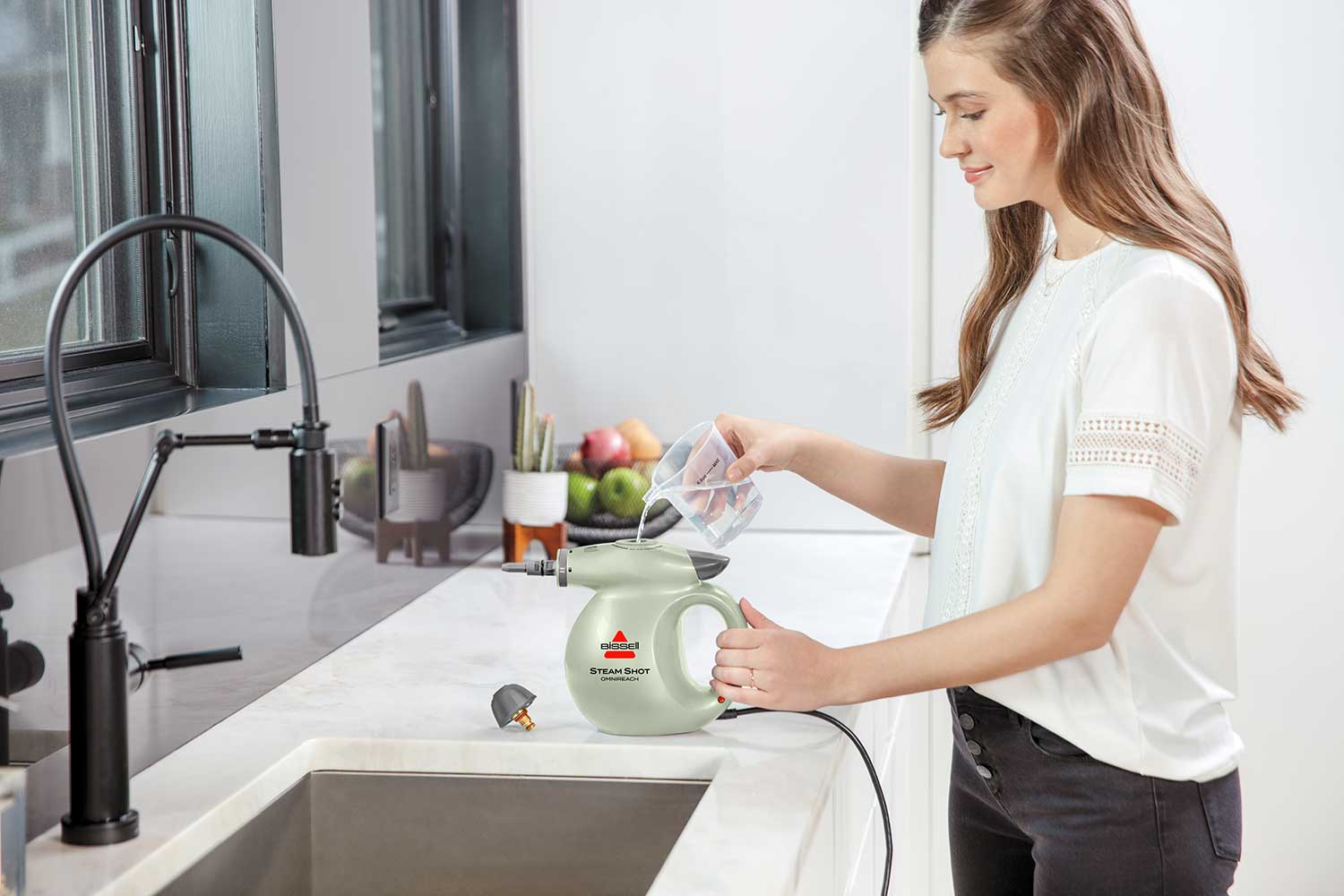
Step 2: Prep the steam cleaner
Step 3: Begin to steam clean
Press the trigger and slowly pass the nozzle over the tile surface, working your way down from the top. Scrub the tile with the brush as you go, making small circles. If an area seems stained or coated in soap scum go over the area multiple times.
Note: If you are concerned that even gentle scrubbing could damage your tiles, you may decide to spray the surface with steam then wipe down with a microfiber cloth, skipping the scrub brush attachment. Always test your product in an inconspicuous spot to check for damage prior to cleaning.
Step 4: Rinse
Use warm water to rinse away the grime loosened by the steam cleaner.
Step 5: Dry
Wipe tiles with a microfiber cloth to prevent water spots and maintain shine.
Method 2: Use a gentle cleansers on natural stone and porous tiles
For surfaces that can’t handle steam, the best path to clean is to use a mild, pH-neutral cleaner.
Materials needed
- Warm water
- pH-neutral cleanser
- Soft brush
- Microfiber cloth
Safe for tiles made of:
- Granite
- Marble
- Limestone
- Cement
- Natural stone
Avoid this method for tiles made of:
- Unsealed stone
- Polished marble
- Terracotta
- Saltillo
Step 1: Prep the shower area
Remove items from the shower and rinse tiles with warm water to begin to soften soap scum.
Step 2: Apply the cleanser
Spray a pH-neutral cleaner designed for stone onto the shower surface. Avoid strong cleaning formulas, such as acidic solutions or vinegar-based ones, which may damage sensitive tiles.
Step 3: Scrub gently
Use a soft brush to scrub the tile using small circular motions. For tough spots you may want to consider lightly scrubbing on a slightly gritty material such as a paste made from baking soda. Be aware that delicate tiles may scratch with any scrubbing, so be sure to test a discrete area of your tiles before digging in.
Pro tip: “Start at the top and work your way down so loosened soap scum and mineral deposits flow away from the cleaned areas,” says Sean, who tested the Steam Shot™ device on many different hard surfaces.
Step 4: Wipe
Use a microfiber cloth to wipe away any grime you work loose from the tiles so it doesn’t dry in place.
Step 5: Optional: Rinse and dry
If you’re worried about water spots or want to give your tiles an extra rinse, spray the shower walls with water and wipe the tiles with a microfiber cloth.
How to clean shower grout
Shower grout tends to have a slightly rough finish, which is one reason it tends to attract and absorb moisture and grime.
Most shower grout is sanded or unsanded, both of which are durable enough for steam cleaning. If your shower tiles have epoxy grout, the next section addresses how to safely clean it.
Although this article details how to clean shower tiles and grout separately, you may find yourself combining steps, cleaning a tile then immediately scrubbing the grout around it. For the most targeted clean, use one of the round brushes that comes with your Steam Shot™ OmniReach™ portable hand steamer on tiles and then change to the Grout Tool for cleaning grout lines.
Method: Steam cleaning grout
Materials needed
- The Steam Shot™ OmniReach™ portable hand steamer and the included Grout Tool
- Bucket of warm water or handheld shower head
- Microfiber cloth
- Soft-bristle brush
Safe for use on:
- Sanded and unsanded grout
Not recommended for cleaning:
- Epoxy grout
Step 1: Prep your shower
Clear the shower of personal items and products.
Step 2: Prep the steam cleaner
Fill your Steam Shot™ OmniReach™ handheld cleaner with demineralized water. Using the attachment nozzle, attach your preferred brush head to the spout (We suggest the Grout Tool, which is long and thin to fit along grout lines.) Plug in the machine to power it on. Once the machine warms up – which takes about 3 minutes – a light will come on and you are ready to start.
Step 3: Begin to steam clean
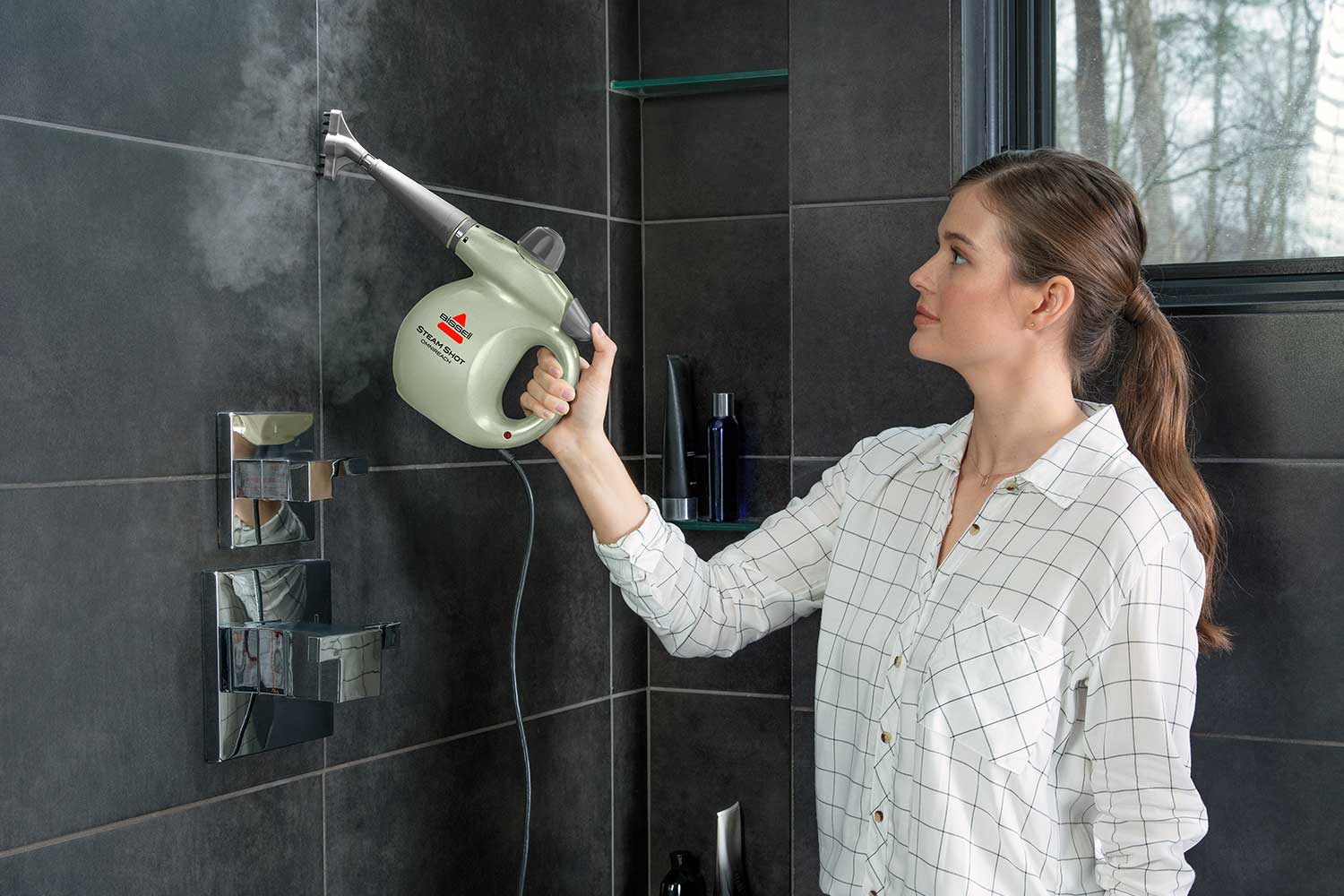
Pro tip: “Keep a window open or a fan on to avoid excess humidity build up in small spaces,” says Sean, the test engineer.
Step 4: Wipe
Use a microfiber cloth to wipe away any grime you work loose so it doesn’t dry on the surface.
Step 5: Optional: Rinse and dry
If you’re worried about water spots or want to make sure you’ve gotten rid of any gunk that’s worked loose, spray the shower walls with water and wipe tiles with a microfiber cloth.
Method: Cleaning epoxy grout with a mild cleanser
Epoxy grout is non-porous and stain-resistant, but it can still collect surface grime. Some epoxy grout is sensitive to high temperatures, which means it may not be safe to clean with steam. Instead, consider using a pH-neutral cleanser.
Materials needed
- Warm water
- pH-neutral cleaner
- Soft brush
- Microfiber cloth
Step 1: Remove items from shower
Before you start to clean, remove soaps, shampoos, and other items.
Step 2: Apply the cleaning solution
Spray or spread the mild cleanser onto the grout lines. Use the soft brush to gently scrub the grout.
Step 3: Rinse
Spray with the shower head or wipe with a damp cloth to rinse thoroughly.
Step 4: Dry
Pat dry with a towel. Consider sealing the grout if it isn’t already sealed.
Preventing buildup
The best way to keep tiles and grout clean is to prevent buildup. Steam cleaners offer a chemical-free option for many tile and grout types, while careful scrubbing preserves the integrity of porous materials.
Tips
Rinse the tiles before you exit: After every shower, rinse tiles and grout with water to remove soap residue.
Wipe down the walls after showers: Use a squeegee or microfiber cloth to remove water and soap residue.
Ventilate the bathroom: Run the fan or open a window to reduce humidity.
Use daily shower sprays: These help break down soap scum before it hardens.
Clean weekly: Use a steam cleaner or gentle scrub to remove grime and maintain cleanliness.
Seal grout annually: Sealing helps prevent moisture absorption and staining.
Frequently asked questions
What is the best way clean shower tiles?
The best cleaner depends on the type of tile, but for a typical shower made with non-porous tiles, the easiest way to shed soap scum is with the help of a steam cleaner. The Steam Shot™ OmniReach™ portable hand steamer comes with 10 attachments, including several scrub brushes that fit on the nozzle. This machine kills 99.9% of germs1 and bacteria1 on hard surfaces, making it perfect for chemical-free cleaning.
How do you clean shower tiles without damaging them?
Make sure to avoid harsh cleansers and abrasive brushes, especially on natural stone tiles like marble or limestone. Many types of tile are durable enough for steam cleaning, such as with a Steam Shot™ OmniReach™ portable hand steamer. But for more porous or delicate materials you may have better luck gently scrubbing by hand with a mild cleanser.
What is the best method for removing soap scum from shower tiles?
To remove soap scum from non-porous shower tiles, use a steam cleaner with a soft bristle brush. Additionally, a non-abrasive scrub brush or cloth combined with a commercial soap scum remover can be used to tackle tougher scum buildup.
What’s the most effective way to clean shower grout?
The best method depends on the type of grout you have. For most standard grout types (sanded or unsanded), steam cleaning is highly effective. It loosens dirt, kills bacteria, and removes mildew without harsh chemicals. Some epoxy grout can stand up to steam cleaning, but because it’s temperature-sensitive, you may want to use a gentle cleanser instead.
How often should I clean shower grout?
For best results, clean grout every few weeks and spot-treat as needed. Regular drying and ventilation help prevent buildup.
¹Kills 99.9% of Staphylococcus aureus, Klebsiella aerogenes, and Aspergillus niger when used as directed. Testing conducted in a third-party laboratory under controlled conditions. Results may vary.
This is a carousel. Use the Next and Previous buttons to navigate between slides, or use the scrollbar to scroll through content.
This is a carousel. Use the Next and Previous buttons to navigate between slides.