How to Clean Outdoor Cushions and Remove Stains, Odors, and Mildew
Key takeaways
- Outdoor cushions collect pet fur, mud, pollen, sunscreen, food spills, and moisture – a consistent cleaning routine prevents mold, fading, and permanent staining.
- Always check your cushion's care label and test any cleaning solution on a small, hidden area before treating the full surface.
- The Little Green® Auto Pro portable deep cleaner works as both a dry vacuum and a deep cleaner, so one machine handles the whole job.
- Fully drying your cushions after every clean is the single most important step for preventing mold and mildew from returning.
Jump to cleaning instructions

Your outdoor furniture sets the tone of your backyard, patio, or deck – and nothing undercuts a beautiful, well-designed space faster than cushions that look worn, stained, or neglected.
This guide to cleaning outdoor cushions walks you through everything you need to know: how to read care labels, why and how to vacuum away pet fur and dry debris, how to deep clean fabric, and how to deal with stubborn stains, mildew, mold, and odors. Whether you’re doing a seasonal refresh or a last-minute clean before friends show, we’ll walk you through the step-by-step process.
Pro tip: Before you start, move your cushions to a flat, open work surface – a patio table, a clean deck, or even a tarp on the lawn. Having room to work on all sides makes every step faster and easier.
Understanding your outdoor cushions
Common cushion materials and fabrics
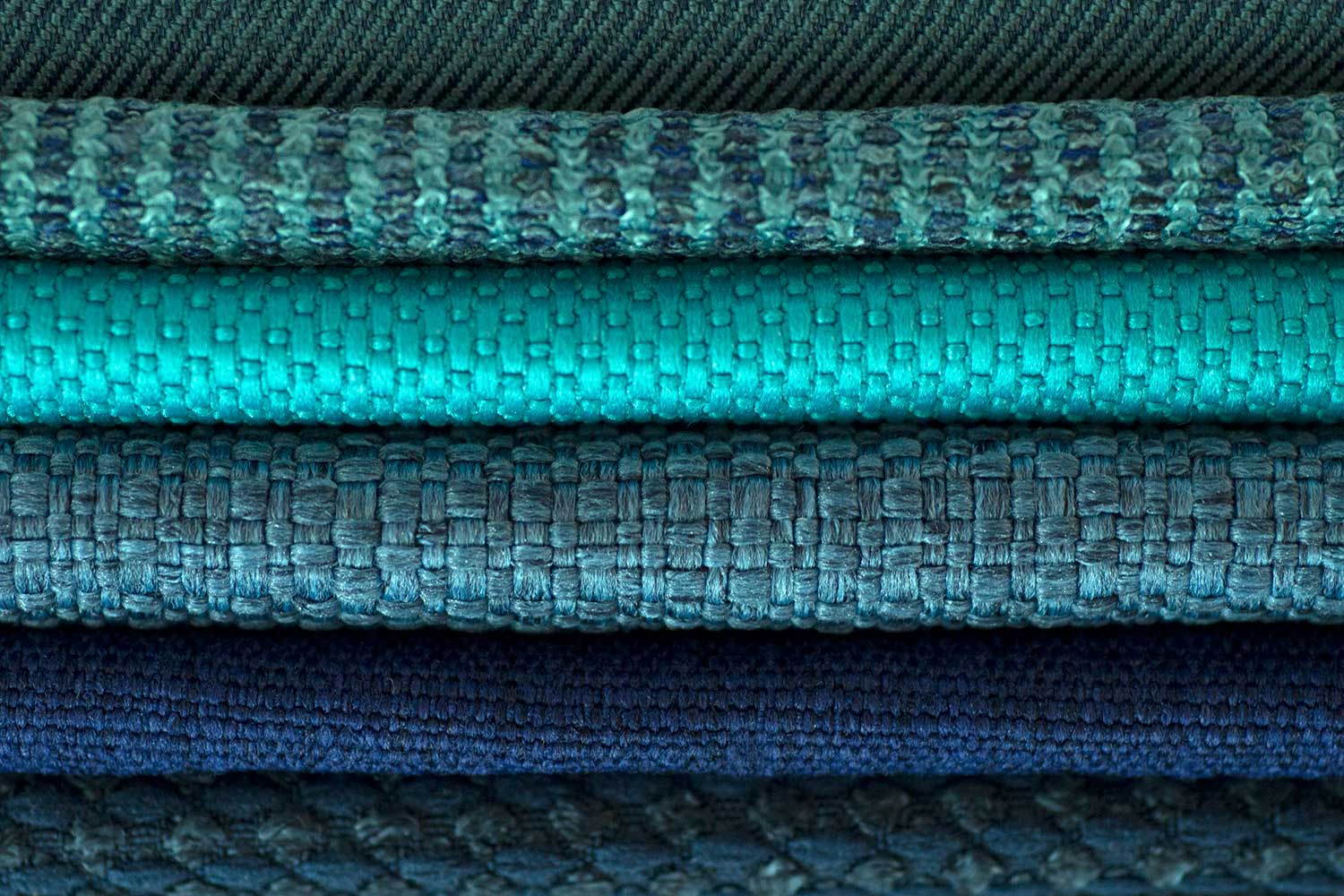
Solution-dyed acrylic fabrics: They’re often sold under brand names like Sunbrella® and are among the most durable and fade-resistant options available.
Polyester and olefin: These are popular budget-friendly fabrics that hold up reasonably well to moisture.
Cotton blends: These provide a softer feel but require more careful handling, as they can shrink or fade if treated aggressively.
Waterproof and coated fabrics: These often have a protective layer that’s great for the elements but can be damaged by harsh scrubbing or high heat during cleaning.
Removable covers vs. sewn-on covers
The distinction between removable and sewn-on covers is one of the most important factors in how you'll approach cleaning. Removable covers can be unzipped, pre-treated, and machine washed. Cushions with sewn-on covers need to be cleaned by hand with the pillow insert in place – using a portable deep cleaner is best for this job. When in doubt, treat the cushion as sewn-on to avoid damaging the foam core or any zipper mechanism.
Checking manufacturer care labels and warranties
Before reaching for any cleaning product, locate the care label – usually found on the underside of the cushion or sewn into an interior seam.
- "W" mean water-based cleaners are safe.
- "S" means solvent-based only.
- "WS" allows for both.
- "X" means no wet cleaning at all - dry brushing or vacuuming only.
Some outdoor furniture warranties can be voided by using the wrong cleaning method, so it's always worth a quick read before you begin.
Gathering the right tools
If you only need to vacuum the outdoor cushions to get them clean, use the BISSELL® PowerClean™ FurGuard™ cordless stick vacuum. For cushions that need a deep clean and stain removal, you can use the BISSELL® Little Green® Auto Pro portable deep cleaner to dry vacuum first, followed by a deep clean with the Little Green™ OXY Spot & Stain Super Concentrate – a pre-measured formula pouch made specifically for BISSELL portable deep cleaners.
How often should you clean outdoor cushions?
A good outdoor cushion care routine has two modes: regular maintenance and deep cleaning – and knowing when to do each makes the job much easier.
For day-to-day upkeep, a quick vacuum is all most cushions need. Everyday debris like grass clippings, pollen, pet fur, and surface dust can be lifted in minutes with the BISSELL® PowerClean™ FurGuard™ cordless stick vacuum, keeping buildup from setting into the fabric between deeper cleans. If you have pets, make it a habit to run the FurFinder™ upholstery tool over cushions after any outdoor lounging session – dog fur and cat hair embed into fabric quickly, and removing them while loose is far easier than tackling them after they've worked their way into the weave.
For deep cleaning, a good rule of thumb is to do a thorough clean at the start of the season before your first outdoor gatherings, at the end of the season before storing cushions away, and once more in the middle of the season to stay ahead of any accumulated grime. Any time a significant stain appears – a pet accident, that red sangria splash, a melted popsicle situation, or a muddy paw print – treat it promptly rather than waiting for your next scheduled clean.
One important rule that applies every time: always vacuum before you deep clean. Attempting to wet-clean a cushion that still has loose fur, dried mud, or debris on the surface pushes that material deeper into the fabric and can clog your machine.
Pro tip: If you're already planning a deep clean, the Little Green® Auto Pro portable deep cleaner includes a dry vacuum tool, so you can vacuum and deep clean with the same machine – no need to pull out a second device.
How to remove dust, debris, and pet fur from outdoor cushions
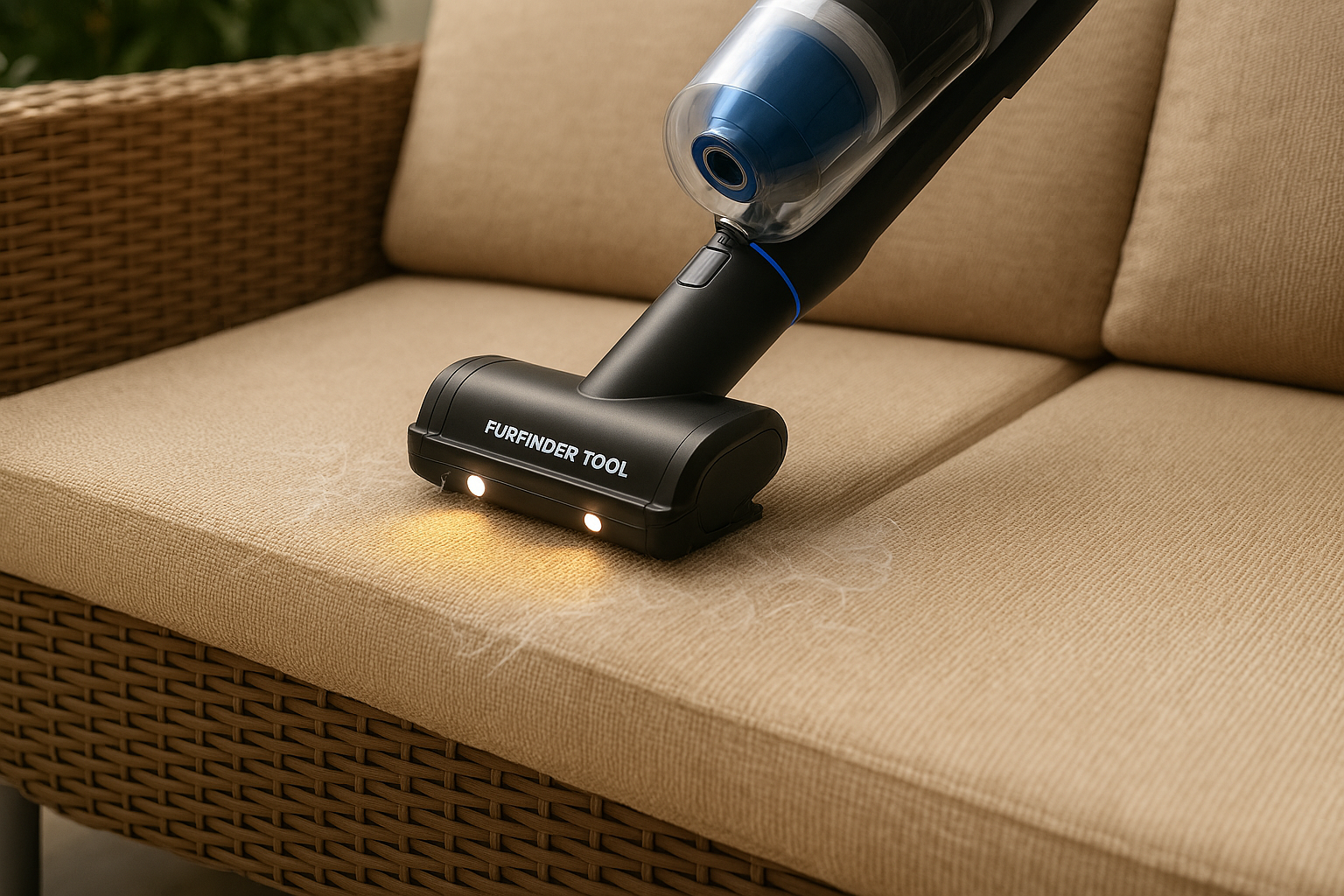
Materials needed
- BISSELL® PowerClean™ FurGuard™ cordless stick vacuum
- FurFinder™ upholstery tool
- 2-in-1 dusting brush/crevice tool
Step 1: Move cushions to a clean work area
Carry cushions to an open, flat surface where you can access all sides easily. If you're working on sewn-on cushion covers that can’t be removed from the padded cushion, clear surrounding furniture to give yourself room to maneuver.
Step 2: Attach the FurFinder™ upholstery tool and vacuum flat surfaces
Attach the FurFinder™ upholstery tool to the PowerClean® FurGuard™ Cordless Stick Vacuum and work methodically across the top and sides of each cushion in slow, overlapping passes. This stick vacuum is only 7.3 pounds so it’s easy to lift and work around outdoor cushions and furniture. It’s specifically designed to lift embedded pet hair, crumbs, pollen, and dirt from upholstery fabric.
Step 3: Switch tools to tackle seams and crevices
Swap to the built-in crevice tool by removing the FurFinder™ tool or the 2-in-1 dusting brush/crevice tool to get into zipper edges, tufted areas, button indentations, and cushion folds. These spots are known to gather dirt and are the easiest to overlook with a flat surface tool.
Pro tip: For pet hair that's deeply embedded in textured fabric, try running the FurFinder™ upholstery tool in two directions – first with the weave, then against it. The back-and-forth motion dislodges fur that a single-direction pass leaves behind.
How to deep clean outdoor cushions with sewn-on covers
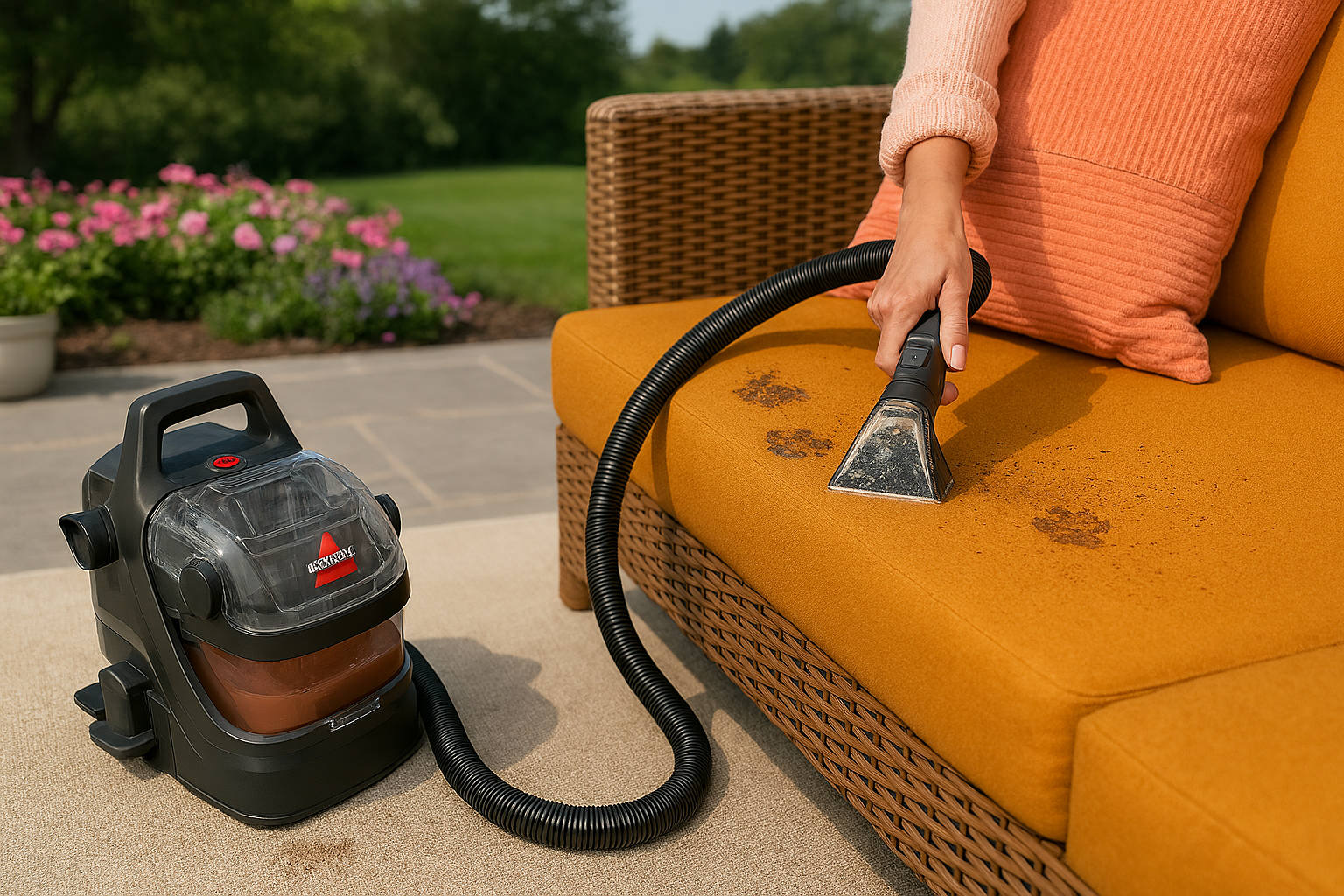
Materials needed
Step 1: Vacuum with the dry vacuum tool
Before introducing any moisture, attach the dry vacuum tool to the Little Green® Auto Pro portable deep cleaner and vacuum the entire cushion. Work in slow, overlapping passes across the top and sides, then switch to the crevice tool to clear debris from seams, folds, and any tufted areas. Removing loose fur, crumbs, and dried dirt first means the cleaning solution can work directly on the fabric, not fight through a layer of surface debris to get there.
Step 2: Check the care label and test a hidden area
Confirm the care label allows water-based cleaning. Then apply a small amount of diluted solution to an inconspicuous spot – the back of the cushion or an interior corner – and wait five minutes. If the fabric shows no discoloration or texture change, you can start cleaning.
Step 3: Fill the clean water tank
Remove the clean water tank from the Little Green® Auto Pro portable deep cleaner and fill it with warm water to the designated water line. Add one pouch of Little Green™ OXY Spot & Stain Super Concentrate to the formula line. Secure the tank back into the machine until it clicks.
Step 4: Attach the cleaning tool and begin
Attach the appropriate cleaning tool, hold it against the cushion surface, press the spray trigger to apply the solution, and scrub gently in small circular motions. Work in sections rather than trying to cover the whole cushion at once for the most thorough clean.
Step 5: Extract moisture from each section
Release the spray trigger and slowly pull the tool backward to suction up the dirty water. Removing as much moisture as possible at this stage shortens drying time significantly and reduces the risk of mildew forming inside the foam core.
Step 6: Repeat on stubborn areas
For heavily-stained spots, apply solution a second time and allow it to sit for two to three minutes before scrubbing and extracting again. Multiple light passes are more effective – and safer for the fabric – than one heavy soak.
Step 7: Allow to dry completely
Stand cushions on their sides or prop them upright so air can circulate on all surfaces. Direct sunlight speeds drying significantly. Do not return cushions to furniture or stack them until they are completely dry – residual moisture in a cushion core can contribute to mildew growth.
Pro tip: On humid days, bring cushions inside to dry near a fan or in a room with good airflow. Even mild overnight humidity can be enough to encourage mildew if the foam core is still damp.
How to clean removable outdoor cushion covers
Consider spot cleaning before disassembling
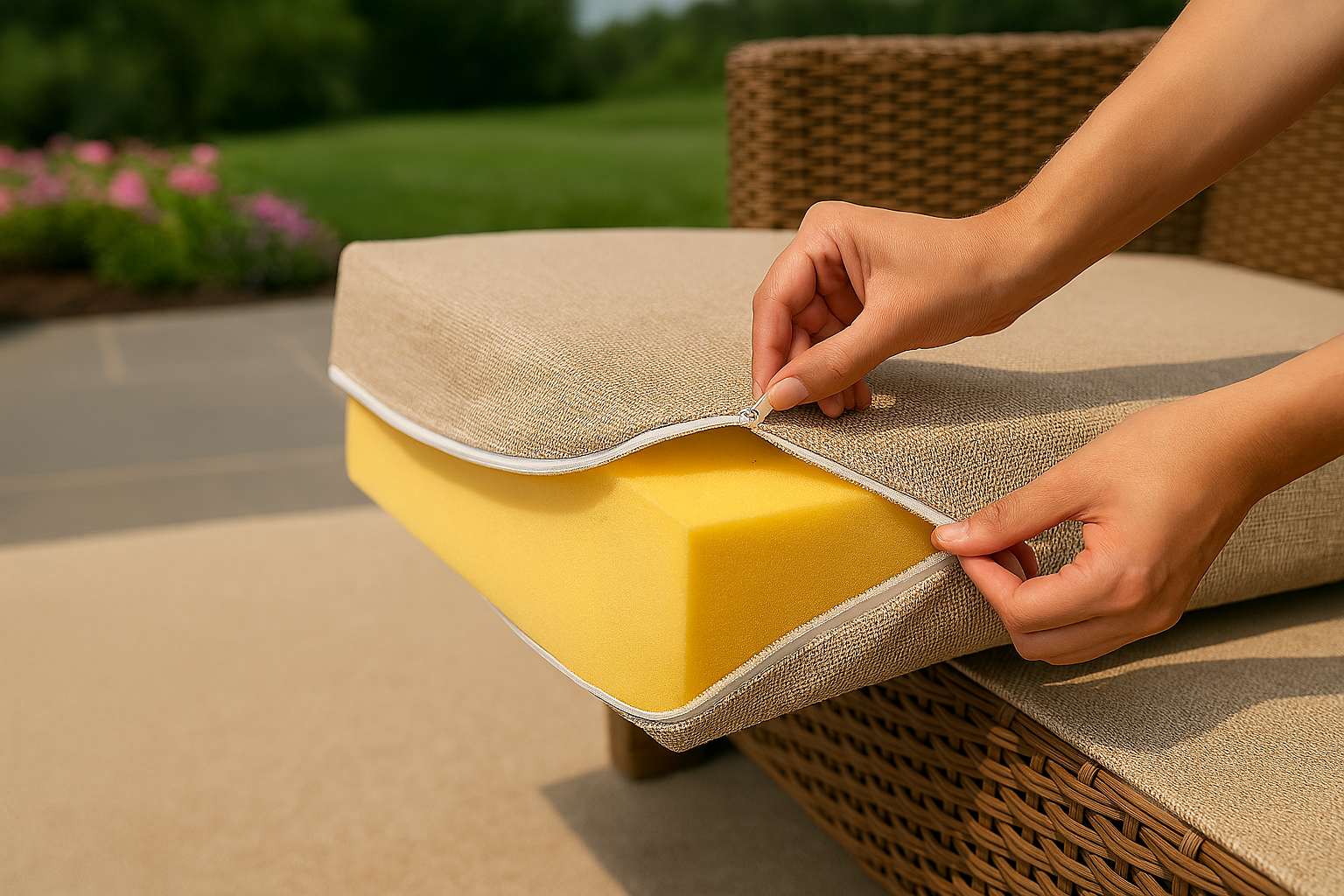
Removing covers safely
When a full wash is warranted, unzip covers slowly and check for resistance before pulling – a stuck zipper pulled too hard can damage the seam, surrounding fabric, or cushion padding. Once removed, set the foam insert aside in a clean, dry spot.
Pre-treating stains on fabric covers
Before washing, spot-treat any visible stains directly. Use your machine’s spray function to apply a small amount of the formula and water mixture to the stained area, work it in gently with a soft brush, and allow it to sit for five to 10 minutes. This step can make a big difference on stain removal, especially on food, pet, or grease-based stains.
Machine washing vs. hand washing
Check the care label. Most polyester and acrylic outdoor fabric covers tolerate a gentle machine wash cycle with cool water and a mild detergent. Cotton blends and more delicate fabrics are generally safer hand-washed in a basin with warm, soapy water. Avoid hot water in either case – it can cause fabric shrinkage and accelerate color fading.
Drying and refitting cushion covers
Air drying is almost always the safest option for outdoor fabric covers. Lay covers flat or hang them over a railing. Do not put covers back on the foam insert until the fabric (and cushion if you cleaned that) are completely dry.
Tips for cleaning different types of outdoor cushion fabrics
Solution-dyed acrylic and performance fabrics
These are among the most forgiving outdoor fabrics to clean. They resist staining, handle moisture well, and respond well to the deep cleaning method described above. Use cool to warm water – not hot – and avoid stiff bristle brushes that can rough up the surface weave.
Polyester and olefin cushions
Both fabrics are relatively moisture-resistant and machine-washable in most cases. They can tolerate slightly more scrubbing than acrylic but are still prone to pilling if treated too aggressively.
Cotton blends and more delicate fabrics
Cotton absorbs water readily, which means it also absorbs stains quickly – spot-treat as soon as possible. Hand washing is preferable to machine washing for most cotton-blend covers, and air drying helps avoid shrinkage.
Waterproof and coated fabrics
The protective coating on these fabrics can be compromised by harsh cleaning agents, hot water, or vigorous scrubbing. Use gentle, circular motions with the cleaning tool, and avoid over-saturating the fabric.
Pro tip: After cleaning waterproof and coated fabric, apply a fabric protector spray to restore the water-repellent barrier.
How do you get rid of odors in outdoor cushions?
Air drying and sun deodorizing
Fully removing odors with a deep cleaner
For persistent or embedded odors – from pet accidents, mildew, or heavy use – surface freshening won’t reach the source. The smell is trapped inside the fabric fibers or cushion fill and eliminating it requires a deep clean into the cushion.
The Little Green® Auto Pro portable deep cleaner, paired with Little Green™ OXY Spot & Stain Super Concentrate, does exactly that. The OXY formula neutralizes odor-causing residue at the molecular level. It doesn't mask the smell, it removes what's causing it. Apply the solution, extract thoroughly, and allow the cushion to dry completely.
When to use oxygen-based cleaners
Oxygen-based cleaners like Little Green™ OXY Spot & Stain Super Concentrate are effective on organic odor sources – pet urine, mildew, food, and sweat. If an odor has returned after a previous cleaning, it's a sign the source wasn't fully removed the first time. A thorough pass with the Little Green® Auto Pro portable deep cleaner and a fresh pouch of formula will address what was left behind.
How to protect and maintain outdoor cushions
Create a routine maintenance schedule
The easiest way to keep outdoor cushions looking good is to stay consistent. A quick vacuum with the BISSELL® PowerClean™ FurGuard™ cordless stick vacuum after each use – especially if pets have been nearby – removes fur, grass, and pollen before they have a chance to settle in. Deep clean at the start and end of each season, and address stains as soon as they happen rather than letting them set.
Use fabric protectors and waterproof sprays
After deep cleaning, consider applying a fabric protector spray to create a barrier against future moisture and staining. These sprays are particularly useful on cotton blends and performance fabrics that see heavy use. Always allow cushions to dry completely before applying any protector, and reapply the spray after each deep clean for better protection from the elements.
Utilize proper storage during the off-season
Before storing cushions at the end of the season, deep clean them thoroughly and allow them to dry completely – storing even slightly damp cushions is one of the fastest ways to guarantee a mold problem by spring. Use breathable storage bags or a ventilated outdoor storage box rather than sealed plastic, which traps moisture, particularly in humid conditions.
When should you repair or replace outdoor cushions?
Signs your cushions are beyond cleaning
Not every cushion can be fully restored. If the foam core holds a permanent odor after multiple deep cleans, the fabric is tearing along seams, or mold has penetrated the fill, you should probably replace the outdoor cushion.
Simple repairs you can do yourself
Loose seams, minor fabric pulls, and small surface tears can often be repaired with outdoor fabric glue or a basic needle and thread rated for exterior use. Addressing small damage early prevents it from spreading and extends the life of an otherwise good cushion.
Choosing replacement cushions that are easier to clean
When buying new outdoor cushions, look for solution-dyed acrylic or performance polyester fabrics with removable, machine-washable covers. Water-resistant fill materials dry faster and resist mold more effectively than untreated foam.
Other BISSELL® products to consider
Don't have the Little Green® Auto Pro portable deep cleaner? The deep cleaning steps in this guide work with most BISSELL® portable deep cleaners – so if you already own a Little Green® model, you're likely already set. Simply pair it with Little Green™ OXY Spot & Stain Super Concentrate for the same OXY-powered clean.
For the dry vacuuming step, any BISSELL® hand vacuum with an upholstery attachment will do the job. You can also add the Pet Hair Eraser® Vacuum Tool to most non-HydroSteam® Little Green® portable deep cleaners to turn them into a dry vacuum – giving you both steps in one machine, just as you'd get with the Little Green® Auto Pro portable deep cleaner.
FAQ
What cleaning solutions are safe and effective for outdoor cushion fabrics?
BISSELL® Little Green™ OXY Spot & Stain Super Concentrate is formulated to be safe on most outdoor upholstery fabrics, including performance acrylics, polyester, and olefin, while delivering OXY-powered stain and odor removal. Always check the care label and test on a hidden area before full application.
How often should you clean outdoor cushions to prevent mold, mildew, and fading?
Vacuum after each use to remove surface debris, deep clean at the start and end of the season, and do a mid-season deep clean as needed – or any time a significant stain occurs. Consistent vacuuming between deep cleans is the simplest and most effective way to prevent buildup.
How do you deep clean outdoor cushions with removable vs. sewn-on covers?
For cushions with sewn-on covers, use the Little Green® Auto Pro portable deep cleaner with Little Green™ OXY Spot & Stain Super Concentrate directly on the cushion surface. For removable covers, try to spot clean in place first. If covers are heavily soiled, remove them, pre-treat stains with Little Green™ OXY Spot & Stain Super Concentrate, and wash per the care label.
Can you clean outdoor cushions without removing them from the furniture?
Yes. The Little Green® Auto Pro portable deep cleaner is designed for exactly this – it brings the machine to the cushion rather than the other way around. For best results, vacuum first to remove dirt, then deep clean in place using the steps outlined in this guide.
Should outdoor cushions always be vacuumed before deep cleaning?
Always. Vacuuming before deep cleaning is not optional – it prevents loose debris from being pushed deeper into the fabric and protects the machine from clogging. If you're using the Little Green® Auto Pro portable deep cleaner, the included dry vacuum tool means you can complete both steps without switching machines.
What is the best way to remove tough stains like bird droppings, sunscreen, or pet accidents from outdoor cushions?
Scrape away any solids first, then blot – don't rub – to lift as much of the stain as possible. Use your machine’s spray function to apply the water and formula mixture directly to the area, allow it to sit for five to 10 minutes, then use the Little Green® Auto Pro portable deep cleaner to scrub and extract. For stubborn stains, repeat the process rather than over-saturate one area.
How do you get rid of odors in outdoor cushions for good?
Surface freshening won't fully eliminate embedded odors – the source needs to be removed from within the fabric. Use the Little Green® Auto Pro portable deep cleaner with Little Green™ OXY Spot & Stain Super Concentrate to spray, scrub, and extract the odor-causing residue from the fibers. Allow the cushion to dry completely afterward, ideally in direct sunlight, for the best result.
This is a carousel. Use the Next and Previous buttons to navigate between slides.
This is a carousel. Use the Next and Previous buttons to navigate between slides, or use the scrollbar to scroll through content.