How to Clean Carpet by Hand
Key takeaways:
- Hand-cleaning works best on small surface stains and fresh spills. For large or deep-soaking stains that have found their way to the carpet padding, a portable or upright carpet cleaner will give you more thorough results.
- Speed matters more than technique. Blotting a spill immediately – before it soaks through – is the single biggest factor in helping it come out completely.
- Not all carpets and rugs should be hand cleaned. Natural fiber rugs like jute, sisal, and seagrass should never be wet-cleaned at home. When in doubt, check the care label first.
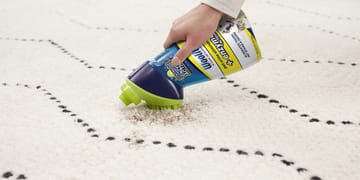
When spills or pets accidents happen, you need to act fast. These deep stains are best tackled with a portable carpet cleaner or upright deep cleaner, which clean beyond the surface stain. (Our guides on How to Clean Carpets Step-by-Step and How to Clean a Rug walk through those methods in detail).
But hand-cleaning is the right call in plenty of situations. If you don't own a carpet cleaner yet, or you're dealing with a surface stain – think a sauce spot sitting on top of carpet fibers rather than wine that's soaked all the way through – a handheld formula lets you treat it fast without setting up a machine. It's also a great first step when you want to tackle a carpet stain quickly with plans to machine clean later.
A product like BISSELL® PET PRO OXY Stain Destroyer handheld cleaning formula makes this easy. The squeezable bottle has a built-in brush head so you can apply the formula to the stain and scrub the soiled area with the brush – no extra tools needed.
Pro tip: Hand-cleaning isn't right for every carpet or rug. Some stains and carpet types need professional attention, and knowing the whether to tackle it yourself or calling in the pros before you start is the most important step of all.
Understanding when and why to clean carpet by hand
Benefits of hand-cleaning versus machine cleaning
Hand-cleaning is quick to set up, requires no equipment, and gives you control over exactly where and how much formula you apply. For a surface spot or a fresh stain, you want to treat before it sets. That’s why relying on a squeezable formula with a built-in brush for a fast, targeted solution is quicker than filling a machine's clean tank to address a small mess. Hand cleaning is also ideal for hard-to-reach areas – tight corners, steps, or spots under furniture where a machine can't easily go.
Situations where hand-cleaning is the best option
Hand-cleaning works well when you're treating a fresh or surface-level stain, doing quick spot work between deeper cleans, or working in a spot that's difficult to access with a machine. The PET PRO OXY Stain Destroyer formula can also be used as a pretreat step before machine cleaning – applying it by hand and allowing it to dwell first can improve deep-cleaning results for tough stains.
Types of carpet suitable for hand-cleaning
Most synthetic carpets – nylon, polyester, and polypropylene – respond well to hand-cleaning with a targeted formula. Low- to medium-pile carpets are the easiest to treat this way.
Wool and wool-blend carpets can usually be spot-cleaned by hand, but need a gentler touch: blot rather than scrub where possible, and apply formula sparingly to avoid soaking the fibers.
Natural fiber rugs like jute, sisal, and seagrass are highly sensitive to moisture and should not be wet-cleaned at home. For these materials, blot up as much of the spill as possible with a dry cloth and consult a professional cleaner.
Always check the care label or manufacturer’s care instructions for your carpet or rug before hand-cleaning – if it says "dry clean only" or "professional cleaning recommended," follow that guidance.
Preparing your carpet and workspace
Check colorfastness
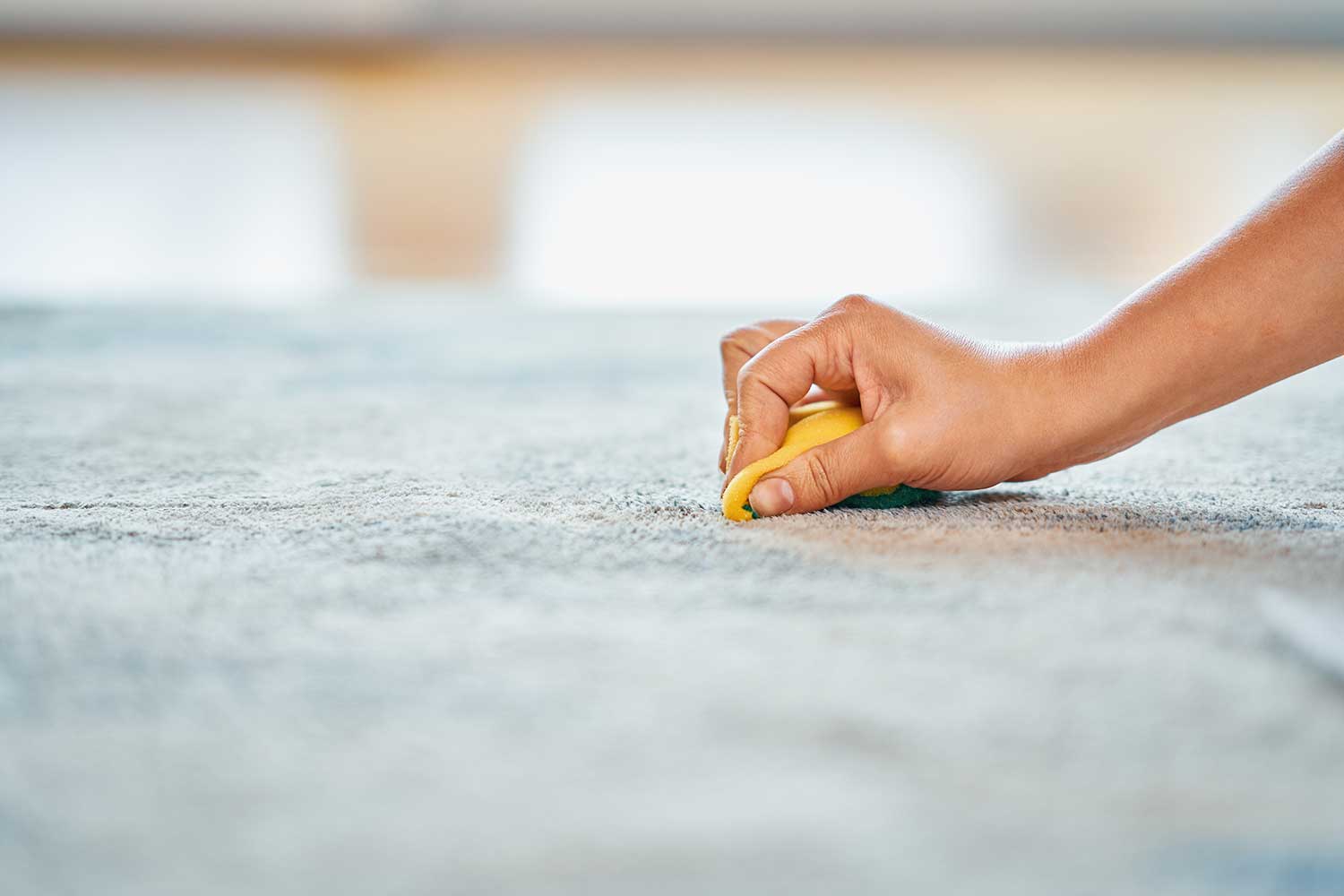
Clear and protect the immediate area
Move any items within the spot you're treating – a shoe, a pet toy, anything resting on the stained area. You don't need to rearrange the room. Just clear enough space to work the stain without interference.
Choose the right cleaning method
Dry cleaning methods for delicate carpets
For moisture-sensitive carpets and rugs, the safest approach is to blot the spot with a barely damp cloth and allow it to dry completely. Avoid rubbing or scrubbing, which can damage delicate fibers or cause dyes to bleed. If the rug is valuable, antique, or has no care label, professional cleaning is the most reliable option.
Low-moisture surface cleaning
For lightly soiled carpet or a spot that sits on top of the fibers, a small amount of PET PRO OXY Stain Destroyer handheld cleaning formula applied directly with the built-in brush head is usually all you need. Work gently and blot away any residue with a clean cloth. Use as little formula as necessary – less is more when moisture is a concern.
Deeper spot-cleaning for set-in stains
For older or more stubborn stains on synthetic carpet, apply the PET PRO OXY Stain Destroyer formula, allow it to dwell for a few minutes to work into the fibers, then scrub gently with the built-in brush head and blot thoroughly. For the most complete clean on a heavily soiled area, follow up with a portable carpet cleaner – see How to Clean Carpets Step-by-Step for guidance.
Step-by-step spot cleaning by hand
Step 1: Spot test your cleaning formula
Even on carpet you've cleaned before, test the formula in a hidden area first. Apply a small amount, wait, then blot with a clean white cloth. No color transfer means you're ready to proceed.
Step 2: Blot fresh spills before applying formula
If the stain is fresh, blot first with a clean, dry cloth to absorb as much liquid as possible before applying any formula. Work from the outer edge of the stain inward to avoid spreading it. For solid or semi-solid messes like food, remove the bulk of the debris before treating the carpet stain.
Step 3: Apply the formula
Squeeze the PET PRO OXY Stain Destroyer handheld cleaning formula directly onto the stained area. Gently scrub the stain with the built-in brush head, working from the edges to the center of the stain. This distributes and works the formula into carpet fibers quickly to address the problem and prevent the stain from setting or spreading.
Step 4: Let it dwell
Allow the formula you brushed in to sit on the stain for a few minutes to give the active ingredients time to break down the stain.
Step 5: Blot and lift the stain
Press a clean, dry microfiber cloth firmly onto the treated area and blot from the outside of the stain inward. Turn to a fresh section of cloth as it absorbs the formula and stain. Continue until no more stain residue or solution transfers to the cloth.
Step 6: Repeat if necessary
For stubborn or set-in stains repeat the application and blotting process. If the stain persists after two or three attempts, a portable carpet cleaner will give you more thorough extraction.
Pro tip: If using a portable carpet cleaner, BISSELL® cleaning formula, which is created by chemists to remove stains and odors.
Caring for different carpet materials
Wool and wool-blend carpets
Wool is durable but sensitive to aggressive scrubbing and soaked fibers. Apply formula sparingly and blot rather than scrub wherever possible. If the care label specifies professional cleaning, follow it – some wool rugs are too delicate for even careful hand-cleaning at home.
Synthetic carpets such as nylon and polyester
Synthetic fibers are the most forgiving when it comes to hand-cleaning. They tolerate formula application and light scrubbing well and respond effectively to the PET PRO OXY Stain Destroyer cleaning solution. These types of carpets are the best candidates for the full spot-cleaning process described above.
Natural fiber carpets such as sisal and jute
Jute, sisal, and seagrass should not be wet-cleaned at home. Moisture causes these fibers to swell, discolor, and can lead to mildew or other permanent damage. If you’re working with carpets made of these materials, blot spills immediately with a dry cloth, allow the area to dry completely, then seek professional cleaning for anything beyond the most surface-level spot.
High-pile, shag, and textured carpets
Deep-pile and shag carpets trap dirt and formula easily, so apply cleaning solution conservatively and work gently. Avoid pressing the brush head in aggressively – it can mat fibers or push the stain deeper. Blot carefully and give these carpets extra time to dry since airflow through dense pile is slower.
Pro tip: Knowing what type of carpet fibers you have goes a long way in ensuring the clean up process doesn’t damage carpet. If you’re stumped, try to blot with a dry cloth and contact professional carpet cleaners to assess the problem.
Dry and post-cleaning care
Improve airflow and speed up dry time
Open a nearby window or direct a fan toward the treated spot to encourage airflow. Even on a small area, good ventilation speeds drying significantly.
Restore the carpet’s appearance
Once the treated area is completely dry, use your fingers or a soft brush to gently smooth the fibers back into their natural direction. This restores the texture and appearance of the pile, especially on higher-pile carpets where the fibers can dry in a flattened or matted position.
When is it safe to walk on the carpet again?
Wait until the spot is completely dry before resuming foot traffic. Walking on a damp carpet compresses the fibers, can re-soil the surface if you’re wearing dirty footwear, and may push residual moisture deeper into the padding. Even walking across it with socks could result in damp socks – yuck – and possible slipping. For a small treated spot, dry time is usually one to two hours with good airflow. You could put little markers like kids’ toys around the spot so you remember it’s wet.
Preventive maintenance to keep carpet cleaner longer
Daily and weekly maintenance habits
Regular vacuuming – once or twice a week in high-traffic areas – prevents dirt and crumbs from being ground into carpet fibers by foot traffic. It's the most effective habit for keeping carpet looking its best between spot treatments and deep cleans.
Use doormats, rugs, and shoe rules
Place quality doormats at every entrance and consider a no-shoes policy indoors. The majority of tracked-in dirt and debris arrives via shoe soles. Runners and area rugs in high-traffic zones protect the carpet underneath and are easier to clean or replace. Since your pets probably aren’t great about wiping their paws when they come in, keep rags near entrances for removing dirt from the dog’s paws every time he or she goes out.
Deal quickly with spills and accidents
Speed is everything. The faster you respond to a spill or pet accident, the better your chances of full removal. Blot immediately with a clean, dry cloth, then treat with the BISSELL® PET PRO OXY Stain Destroyer handheld cleaning formula while the stain is still fresh. Never rub a fresh spill – it spreads the stain deeper into the fibers.
When to consider a deeper clean
Hand-cleaning and spot treatment solutions handle surface messes well, but they can't replace a thorough machine deep clean for embedded soil, widespread staining, or odors that have soaked into the carpet backing. For full-carpet cleaning at home, consider using a portable or upright deep cleaner.
Common mistakes to avoid when cleaning carpet by hand
Avoid over-wetting and backing damage
Too much moisture can soak through to the carpet backing and padding, possibly contributing to mold growth if it doesn’t dry properly and can cause the backing to delaminate over time. Apply formula conservatively and blot out as much moisture as possible after treating. Then, point a fan at the wet spot to accelerate drying.
Prevent color bleeding and fiber damage
Always test formula in a hidden area first, and use gentle, circular strokes from the outside in rather than vigorous back-and-forth motions. Avoid stiff-bristled brushes that can fray or distort carpet fibers when cleaning carpet by hand, and never scrub aggressively. Blotting is almost always safer for carpets than scrubbing.
Know when not to attempt hand-cleaning
If your carpet or rug is labeled "dry clean only" or "professional cleaning recommended" or does not have “W” or “W/S” on the cleaning label, don't attempt wet cleaning at home. The same applies to antique, handmade, or high-value rugs where irreversible damage is a real risk. When in doubt, a professional cleaner is always the safer call.
FAQ
Can I use homemade carpet cleaning solutions?
DIY solutions like dish soap and water or white vinegar can address very light surface spots in a pinch, but they carry risks. Dish soap leaves a soapy residue that attracts future dirt, and acidic solutions can affect certain dyes. A purpose-made formula like BISSELL® PET PRO OXY Stain Destroyer cleaning solution is more reliable. It's designed specifically for carpet and upholstery, contains no dyes or heavy metals, carries the EPA's Safer Choice label, and is safe around kids and pets when used as directed.
How do I remove common stains like coffee, wine, or pet accidents from carpet without a machine?
The key here is to act fast. Blot the stain immediately with a clean, dry cloth to absorb as much as possible before it sets. Then squeeze PET PRO OXY Stain Destroyer handheld cleaning formula directly on the stain. Use the brush to work it gently into the fibers and allow the solution to sit for a few minutes. Blot from the outside edge inward with a clean, dry cloth, repeating as needed. For pet accidents and illnesses, multiple applications – or a pass with a deep cleaning machine – may be necessary to fully eliminate odor-causing compounds.
How long does it take for a hand-cleaned carpet to dry, and how can I speed it up?
A small treated spot typically dries in one to two hours with good airflow. To speed things up, blot out as much moisture as possible immediately after cleaning, open a window, or direct a fan at the area. Avoid walking on the damp spot until it's fully dry.
Are there any types of carpet or rugs that should not be cleaned by hand, and how can I tell?
Yes – scrubbing and wet-cleaning can damage certain fibers and dyes. Natural fiber rugs like jute, sisal, and seagrass should never be wet-cleaned at home. Wool, silk, and handmade or antique rugs are generally best left to professionals. Check the care label for warnings like "dry clean only" or "professional cleaning recommended." If there's no label, test a hidden corner by applying formula, letting it briefly sit, then blotting with a white cloth – if any color transfers, stop immediately and seek professional advice. When in doubt, and for any rug that's valuable or sentimental, a professional cleaner is always the safer choice.