How to Clean Around Your Cat Litter Box: Removing Litter, Litter Dust, and Tracked Messes
Keeping the litter box area clean and fresh smelling can keep your household happy and benefit the health of your cat. But litter dust, tracked granules, and occasional spots around the litter box make the area tricky to keep clean. Whether you're dealing with fine dust that settles on nearby surfaces or yucky, mystery messes, tackling litter box cleanup requires the right approach and tools.
This guide covers the most effective techniques for cleaning around your cat's litter box, from litter tracks and dusty footprints to the occasional drip or “miss”.
Pro Tip: Clean the litter box area at least twice a week to prevent dust buildup and to keep litter from spreading throughout your home. Regular maintenance makes cleanup fast.
Jump to cleaning instructions
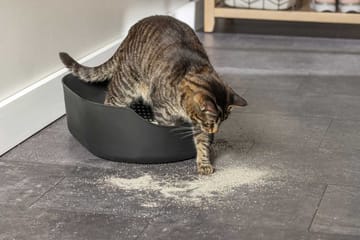
Quick answer: Best way to clean around a litter box
The most effective litter box cleaning routine combines vacuuming for dust and tracked litter with wet cleaning for stuck-on mess. Use a Pet Hair Eraser® Allergen Lift-Off® vacuum cleaner to remove litter dust and scattered granules. If your cat tends to leave stuck-on messes around the litter box, the CrossWave® OmniForce® Edge All-in-One Multi-Surface cleaner is the best machine for you. You can use it first in Power Vac Mode to remove any dry dust and debris, then switch to Power Mop Mode and use Hard Floor Sanitize Formula and water in the clean tank , for tackling dried-on messes and odor elimination. This two-step approach keeps the area hygienic and makes it safe to use even with self-clumping litter, which should be vacuumed, but not mopped.
Understanding cat litter: Why it’s so difficult to clean
Cat litter that has escaped the litterbox creates a few cleaning challenges and mess types, each of which require different approach.
- Litter dust is generally made up of microscopic clay or silica particles that become airborne. The fine dust settles on floors and walls, creating a thin.
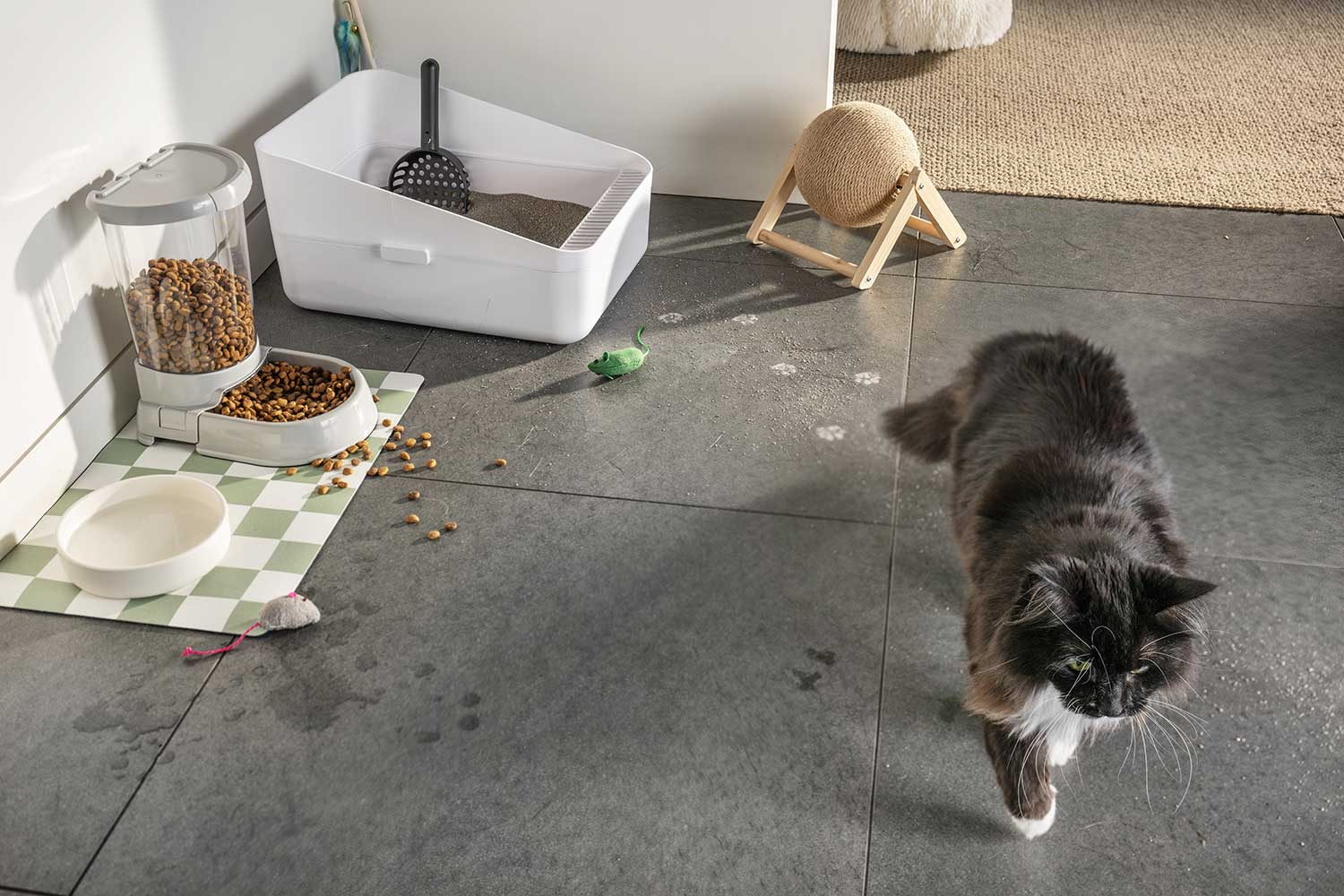
- Tracked litter granules stick to your cat's paws and get scattered across floors. These granules can travel surprisingly far from the litter box location, even getting into carpet fibers and in room corners.
- Stuck-on mess from litter box accidents, urine drops, and other “oopsie” moments on hard floors can cause spots, dried-on messes, and persistent odors.
How to remove litter dust and tracked litter
What's the fastest way to clean litter dust?
Vacuuming is the most efficient method for removing litter dust and tracked granules. The Pet Hair Eraser® Allergen Lift-Off® vacuum is designed to capture fine particles in its HEPA Sealed Allergen System, which traps dust that would otherwise recirculate in the air. It also has powerful suction and Scatter Free Technology, which keeps litter from spreading as you clean.
Method: Vacuum technique for litter cleanup
Materials needed
- The Pet Hair Eraser® Allergen Lift-Off® vacuum, which features HEPA filtration
Hose and crevice tool attachment
- Microfiber cloth for wiping surfaces
Safe for use on:
- Hard floors (tile, vinyl, laminate)
- Carpet and area rugs
- Baseboards and walls
Step 1: Clear the area
Move the litter box, if possible, to access the full floor area underneath and around it. Remove any litter mats or protective surfaces to clean separately.
Step 2: Vacuum the floor thoroughly
Turn on your Pet Hair Eraser® Allergen Lift-Off® vacuum and begin vacuuming the entire area. Start at the edge of the space you intend to clean and use slow, overlapping passes to ensure complete pickup. If your litter box is on carpet, make slow passes to ensure the vacuum’s suction can pick up as much as possible since litter can embed between fibers.
Step 3: Use attachments for walls and baseboards
Switch to the hose and Crevice Tool attachment to clean litter dust from baseboards, corners, and the lower portions of nearby walls, where litter dust can settle vertically. Run the crevice tool along the entire baseboard length and into corners where dust accumulates.
Step 4: Vacuum litter mats and accessories
If you use a litter mat, vacuum both sides thoroughly. The textured surface can trap granules, requiring multiple passes to remove completely.
Step 5: Wipe down surfaces
Use a slightly damp microfiber cloth to wipe the exterior of the litter box, nearby furniture legs, and any other surfaces where dust may have settled that are a little tricky to vacuum.
How to clean stuck-on messes around the litter box
Can you sanitize floors around a litter box?
Yes, even if you don’t see any visible spots or stuck-on messes, you should sanitize the litter box area regularly to eliminate bacteria and odor-causing compounds. BISSELL® Hard Floor Sanitize Formula can be used to clean and sanitize the sealed hard floors around your litter box, killing bacteria¹ that may cause persistent odors. This formula can be used in the CrossWave® OmniForce® Edge All-in-One Multi-Surface wet dry vac, which can remove stuck-on waste.
Method: Wet cleaning technique for stuck-on mess
Materials needed
- CrossWave® OmniForce® Edge wet dry vac, first in Power Vac Mode, then in Power Mop Mode
- Warm water plus Hard Floor Sanitize Formula, which are mixed in the CrossWave® machine’s clean tank
- Microfiber cleaning cloths
Safe for use on:
- Sealed hard floors (tile, vinyl, sealed hardwood, laminate)
Not recommended for:
- Unsealed wood floors
- Carpet (use a portable deep cleaner, such as the Little Green® Machine, instead)
- Porous stone that isn’t properly sealed
Step 1: Vacuum loose debris first
Before wet cleaning, move the litter box to a different area and use your CrossWave® OmniForce® Edge wet dry vac in Power Vac Mode to remove all loose litter, dust, and debris from the space.
Pro tip: When cleaning cat litter, always vacuum before mopping. When wet, kitty litter can become muddy litter paste, which is more challenging to remove than dry litter. This is especially true if you use self-clumping cat litter, which should always be vacuumed, never mopped.
Step 2: Prepare your CrossWave® machine
Fill the clean water tank of your CrossWave® OmniForce® Edge wet dry vac with water and add BISSELL® Hard Floor Sanitize Formula using the lines on the clean tank to get the correct ratio. This formula is specifically designed to kill 99.9% of bacteria¹ on sealed hard floors in only 5 minutes.
Step 3: Wet clean the floor
Turn on your CrossWave® wet dry vac in Power Mop Mode and begin cleaning the litter box area with slow, overlapping passes. Press the trigger on the handle as you move forward to dispense cleaning formula across the brush roll. Release the trigger as you pull the machine back, mopping up excess solution. Make multiple passes over heavily soiled sections, releasing extra cleaning solution as needed.
Step 4: Allow floor to dry
Let the cleaned area air dry completely before returning the litter box. This typically takes just a few minutes, depending on ventilation.
How to deep clean the litter box area
Weekly deep cleaning routine
Use your Pet Hair Eraser® Allergen Lift-Off® Vacuum Cleaner to keep the litter box area tidy throughout the week. This gives you a chance to remove litter and dust from floors, walls, baseboards, and nearby furniture. You may want to clean once a day, especially if you have more than one cat.
For optimal hygiene, perform a thorough deep clean of the entire litter box area weekly.
- Relocate the litter box temporarily to access all surfaces
- Vacuum thoroughly using the CrossWave® OmniForce® Edge wet dry vac in Power Vac Mode
- Wet clean all hard surfaces with the CrossWave® OmniForce® Edge wet dry vac in Power Mop Mode, using sanitizing solution to truly clean the space
- Wipe down the litter box exterior with sanitizing wipes or a cloth dampened with cleaning solution
- Wash litter mats according to manufacturer's instructions
- Check and clean air vents near the litter box area, as they can accumulate litter dust
- Replace litter box liners if you use them
How to prevent litter box mess
The best approach to litter box cleanup is preventing excessive mess in the first place.
Prevention tips
Use a high-sided litter box: Boxes with tall sides (at least 6 to 8 inches) contain more litter when cats dig and cover. Consider covered litter boxes or self-cleaning litter boxes, which may trap more litter and litter dust.
Invest in a large litter mat: Position a textured litter mat extending at least 2 feet from the litter box entrance. Choose a mat with deep grooves or textures to capture granules from paws. Larger mats capture more tracked litter before it spreads.
Choose low-dust litter: Switch to low-dust or dust-free litter formulas made from materials like corn, wheat, or specialized clay. These produce significantly less airborne dust than traditional clay litter.
Position the box strategically: Place litter boxes on hard floors rather than carpet when possible. Hard floors are easier to clean and sanitize than carpet.
Maintain proper litter depth: Keep litter at 2 to 3 inches deep. Overfilling causes more scattering when cats dig; too little litter means less absorption and more tracking.
Scoop daily: Remove waste daily to minimize odor and reduce the likelihood of cats tracking soiled litter out of the box. Cats are also more likely to dig excessively in dirty litter, creating more mess.
Use litter box liners: Disposable liners make it easier to change litter completely and protect the box itself from absorbing odors and stains.
Invest in a self-cleaning litter box: Automatic litter boxes are designed to make litter box cleanup easier, including trapping odors and eliminating the need for scooping.
Frequently asked questions
How often should you clean around a cat litter box?
Vacuum and spot clean around your litter box daily or as needed, and perform wet cleaning/sanitizing weekly. Daily litter box scooping can reduce tracked messes, as cats may dig less in a clean box. High-traffic homes with multiple cats may require even more regular floor cleaning to manage litter dust and tracked granules. (If this feels too daunting to manage, you may want to consider a high-performing robot that can vacuum and mop.)
What's the best vacuum for cat litter cleanup?
The Pet Hair Eraser® Allergen Lift-Off® Vacuum is ideal for cat litter cleanup due to its strong suction, HEPA filtration for trapping fine dust particles, and specialized attachments for cleaning corners and baseboards. It also has Scatter Free Technology, which prevents litter from escaping to far-flung corners.
Can you use regular floor cleaner around a litter box?
While all floor cleaning solutions for BISSELL® CrossWave® machines can remove stuck-on messes, BISSELL® Hard Floor Sanitize Formula kills 99.9% of bacteria¹ on sealed hard floors. This cleaning formula can be mixed with water and used in the CrossWave® OmniForce® Edge All-in-One mop + vac. Keeping the area clean and free of bacteria is the best way to prevent odors.
Will cat litter damage my vacuum?
Cat litter won't damage your vacuum. To ensure peak vacuum performance, no matter what you clean, regularly change or clean the filter according to manufacturer’s instructions.
Can you vacuum clumping cat litter?
Yes, you can vacuum small amounts of clumping litter and loose granules. However, vacuum dry litter only. Never vacuum wet clumps or soiled litter, as moisture can damage your vacuum and create unpleasant odors. For wet clumps, pick them up by hand first, then vacuum any remaining dry residue. This rule also applies when using a CrossWave® wet dry vacuum – litter, and especially self-clumping litter – should be vacuumed completely before an area is mopped.
What should I do if my cat tracks litter throughout the house?
Address tracking by placing a large textured mat at the litter box exit to trap more pieces of litter, vacuuming high-traffic areas daily, and switching to a low-tracking litter formula with larger, heavier granules. You may also consider trimming excess fur between your cat's paw pads to keep litter from sticking.
How do you clean litter dust off walls?
Use the hose attachment on your Pet Hair Eraser® Allergen Lift-Off® Vacuum to gently vacuum dust from walls and baseboards. You can follow with a slightly damp microfiber cloth to wipe away any remaining film from these areas.
disclaimer: ¹Kills 99.9% of Enterobacter aerogenes (ATCC 13408), Staphylococcus aureus (ATCC 6538)(Staph) and Salmonella enterica (ATCC 10708).
This is a carousel. Use the Next and Previous buttons to navigate between slides.
This is a carousel. Use the Next and Previous buttons to navigate between slides, or use the scrollbar to scroll through content.