How to Clean an Office Chair
Key takeaways:
- Identify your chair material before reaching for any cleaning product – fabric, mesh, leather, faux leather, and hard plastic all require different approaches.
- Always vacuum before wet cleaning. Dry debris worked into fabric or mesh during wet cleaning becomes harder to remove.
- The PowerClean® FurFinder™ cordless 3-in1 vacuum handles dry cleaning for every chair type. The Little Green® Cordless portable carpet cleaner with PET PRO OXY formula is the recommended deep clean method for fabric and mesh upholstery.
- Don't forget the chair base, casters, and armrests – these collect hair, dust, and grime and are often the most neglected parts of the clean.
Jump to cleaning instructions
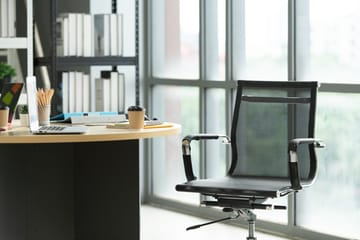
Your office chair may see more daily contact than almost any other piece of furniture in your house, especially if you work from home. Hours of sitting, snacking, pets jumping up, and the general accumulation of skin cells, dust, and debris make it one of the faster-collecting surfaces around. Not to gross you out, but this ultra-lived in chair is likely overdue for a deep clean.
Establishing a regular cleaning routine keeps office furniture looking better and lasting longer. This guide, assembled by the cleaning experts at BISSELL, walks you through exactly how to clean every common chair material.
Why cleaning your office chair matters
Health and hygiene benefits
Office chairs accumulate dander allergens, dust mites, pet fur, human hair, sweat, body oils, bacteria, and mystery odors over time – particularly in the seat cushion and backrest where contact is greatest. Regular cleaning removes contaminants and keeps the chair hygienic for everyday use.
Extending the lifespan of your chair
Regular cleaning can help your chair last as long as possible, from an aesthetic standpoint at least. Office chairs can be expensive and if yours needs a little TLC to spruce it up, there’s a lot that can be done to improve the look, and smell, of an office chair. With minimal effort, you can make yours last as long as possible – or at least until the support gives out or something breaks.
Identify your office chair material
Before cleaning anything, identify what your chair is made of. Most office chairs fall into one of a few categories: foam that is covered with fabric, mesh, leather or faux leather/vinyl; or chairs that are almost fully made of hard plastic or metal.
Each requires a different approach – using the wrong product or method on the wrong material can cause permanent damage. Most chairs have a care label attached to the underside of the seat or on the chair's frame.
On foam-covered chairs, look for standard upholstery cleaning codes:
- "W" (water-based cleaning safe)
- "S" (solvent-based cleaning only)
- "W-S" (can handle water- or solvent- based cleaners)
- "X" (vacuum only – no wet cleaning)
Pro tip: When in doubt, spot test any cleaning product in a hidden area before proceeding.
Tools and supplies you will need
Basic cleaning tools – suitable for all materials
- BISSELL® PowerClean® FurFinder™ Cordless Stick Vacuum with built-in Crevice Tool and 2-in-1 Dusting Brush and the FurFinder™ Upholstery Tool
- Clean microfiber cloths
- A soft-bristle brush for mesh and crevices
- A spoon or blunt edge for lifting caked-in crumbs or dirt
Deep cleaning products – suitable for certain surface materials
- Fabric and mesh: BISSELL® Little Green® Cordless Portable Carpet Cleaner with PET PRO OXY Spot & Stain Urine Eliminator Formula for deep cleaning and stain treatment
- Leather: pH-balanced leather cleaner and leather conditioner (see our full guide to cleaning a leather couc h for detailed leather care instructions)
- Faux leather/vinyl: Mild, pH-neutral cleaner on a soft cloth
- Hard plastic and metal: All-purpose cleaner or disinfectant wipe for hard surfaces
Pre-cleaning preparation
Before starting any cleaning method, take a few minutes to prepare. Move the chair away from the desk and any nearby furniture to give yourself full access. Check the care label and spot test any new product in a hidden area, such as the underside of the seat or the back of a cushion, before applying it to a visible surface. Remove any items stored on or under the chair, and adjust the height so you can access the base and caster wheels comfortably.
How to vacuum an office chair
Vacuuming is the right first step for every chair type and a sufficient standalone clean for chairs that aren't heavily soiled. The BISSELL® PowerClean® FurFinder™ Cordless Stick Vacuum is well-suited to office chair cleaning – it converts to a handheld vacuum by detaching from the extension wand, giving you precise control across upholstery, crevices, and hard surfaces.
Step 1: Select the right mode. Use Eco mode (up to 40 minutes runtime) for light dust and pet hair, Medium mode (up to 20 minutes) for most cleaning sessions, or Turbo mode (up to 12 minutes) for areas with a lot of crumbs or embedded pet hair.
Step 2: Use the FurFinder™ Upholstery Tool on flat soft surfaces. Attach the FurFinder™ Upholstery Tool to the hand vac and work across the seat cushion and backrest in slow, overlapping passes. The tool's bristles and built-in de-furring strip lift embedded pet hair and debris from fabric and mesh upholstery up to 2x faster than standard attachments.¹
Step 3: Use the Crevice Tool with the Dusting Brush pulled down when cleaning sensitive surfaces. For leather, faux leather, or delicate upholstery, slide the brush component down on the 2-in-1 dusting brush to create a soft cleaning surface that lifts debris without direct contact between the hard tool and the material.
Step 4: Slide the Dusting Brush up so you are cleaning with the hard plastic of the Crevice Tool for seams and gaps. Work the Crevice Tool along all seat seams, between the seat cushion and backrest, around armrest joints, and into any crevices where crumbs and debris accumulate.
Step 5: Vacuum the chair base and casters. Use the Crevice Tool to vacuum the chair base, adjustment levers, and around the caster wheels where hair and dust collect.
Note: Review the steps below for details on how to clean casters, arm rests, and head rests.
How to deep clean fabric office chairs
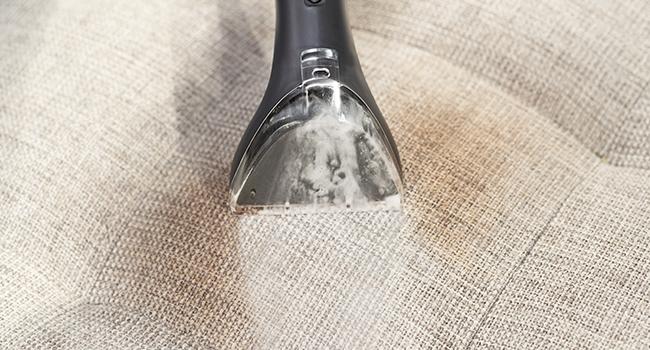
Spot clean and deep clean fabric upholstery
For fresh spills, blot immediately with a clean, dry microfiber cloth, working from the outside of the stain inward. Never rub. For a targeted spot clean or a full-chair deep clean, use the Little Green® Cordless portable carpet cleaner with PET PRO OXY Spot & Stain Urine Eliminator formula, which permanently removes tough stains and eliminates odors with StainProtect® Technology to help protect against future staining.
Step 1: Fill the clean water tank. Fill with warm tap water to the fill line and add PET PRO OXY formula to the solution line.
Step 2: Apply and scrub. Hold the spray trigger and apply solution using the 4" Tough Stain Tool. For spot cleaning, focus on the stained area and work the formula in with gentle circular pressure, pushing the bristles of the tool into the upholstery.
For a full deep clean, work in overlapping sections from the top of the backrest downward to the seat cushion.
Step 3: Extract. Release the trigger and make a suction-only pass, pressing the tool into the material to extract the dirty solution and lift the stain from the fabric. Follow the spray and scrub step with dry suction passes to remove as much moisture as possible.
Step 4: Repeat if necessary. For stubborn or set-in stains, repeat the spray-and-extract cycle until the stain is fully lifted.
Dry fabric safely
After deep cleaning, allow the chair to air dry completely before use. Do not sit on damp fabric upholstery. Open a window or direct a fan at the chair to speed drying. Avoid placing the chair in direct sunlight to dry, as prolonged UV exposure can fade fabric.
How to deep clean mesh office chairs
Mesh is one of the most practical chair materials – breathable and resistant to liquid absorption – but it traps fine debris, pet hair, and dust in its weave that vacuuming alone doesn't always fully remove.
- Vacuum first. Use the PowerClean® FurFinder™ cordless vacuum with the FurFinder™ Upholstery Tool across the full mesh surface, working in both the vertical and horizontal direction of the weave to dislodge trapped debris.
- Deep clean with the Little Green® Cordless. Cushion-backed mesh upholstery responds well to the spray-scrub-extract method detailed above. Use the Little Green® Cordless portable carpet cleaner with PET PRO OXY formula, applying gentle pressure with the tool to work solution through the mesh weave. Follow immediately with a suction-only pass to extract dirty water and prevent moisture from pooling in the mesh.
- Dry thoroughly. Mesh dries faster than fabric but still benefits from good airflow. Direct a fan at the chair or leave it near an open window until fully dry.
If you have a mesh-only chair (where you can see through the mesh because there’s no foam backing), put a towel down under the chair before you start cleaning to catch excess formula. You can still spray and scrub but you won’t be able to suction out moisture from the chair in the same way.
- Dry thoroughly. Mesh dries faster than fabric but still benefits from good airflow. Direct a fan at the chair or leave it near an open window until fully dry.
How to clean leather and faux leather office chairs
For detailed leather care guidance, see our full guide to cleaning a leather couch – the same principles apply to leather office chairs.
Leather office chairs
- Vacuum with PowerClean® FurFinder™ cordless vacuum's 2-in-1 Dusting Brush (brush component slid down) before any wet cleaning.
- Apply a pH-balanced leather cleaner to a soft microfiber cloth – never directly onto the leather – and wipe in gentle, even strokes.
- Follow with a dry cloth to remove residue and allow to air dry.
- Condition with a leather conditioning product every three to six months to prevent cracking. Never use harsh chemicals, excess moisture, or abrasive tools on leather.
Faux leather and vinyl office chairs
Faux leather is more moisture-tolerant than genuine leather but is vulnerable to cracking and peeling if exposed to harsh chemicals or abrasive cleaning.
- Vacuum with the 2-in-1 dusting brush.
- Wipe down with a soft cloth that’s been lightly dampened with a pH-neutral cleaner that says it’s safe for faux leather and vinyl.
- Let it dry. Direct a fan at the chair or leave it near an open window until fully dry.
Pro tip: Avoid soaking the surface, and never use solvent-based cleaners which can degrade the vinyl coating over time.
How to clean plastic, metal, and hard surfaces on your chair
Armrests and base components
Hard plastic armrests and the chair base accumulate a film of skin oils, dust, and grime over time.
- Wipe down with a microfiber cloth dampened with an all-purpose cleaner.
- For textured plastic surfaces, you could use a microfiber dusting brush or work with Crevice Tool and Dusting Brush on the PowerClean® FurFinder™ cordless vacuum first to lift dust from surface texture before wet cleaning.
Casters and wheels
Chair casters are among the most neglected – and most debris-laden – parts of the chair.
- Use the Crevice Tool to vacuum around the caster housing and axles.
- For hair and thread wrapped around the wheel axles, use scissors or a seam ripper to cut through tangled material before vacuuming.
- Wipe the wheel surface with a damp cloth to remove grime.
Gas lift, adjustment levers, and mechanisms
Go slowly and carefully when cleaning these office chair parts. Wipe all hard adjustment components with a clean, slightly damp cloth. Avoid getting moisture into mechanical joints or gas lift mechanisms. These areas rarely need more than a wipe-down but benefit from regular attention to prevent grime from affecting lever function over time.
Disinfect high-touch areas safely
Disinfecting is most relevant for hard surfaces – armrests, adjustment levers, and the chair base – rather than upholstery.
For these areas, a disinfectant wipe or spray appropriate for hard surfaces is effective – especially if you were “working from home” with a cold recently.
Do not apply disinfectant sprays directly to fabric, mesh, or leather upholstery, as they can cause discoloration or fiber damage.
For upholstery, the deep cleaning method with PET PRO OXY formula addresses odors and bacteria in fabric without harsh chemical exposure.
Preventive maintenance and cleaning schedule for an office chair
- Weekly: Quick vacuum with the PowerClean® FurFinder™ cordless vacuum; wipe down arm rests and hard surfaces with a cloth; blot any spills immediately
- Monthly: Deep clean fabric and mesh with the Little Green® Cordless cleaner and PET PRO OXY formula; clean casters
- Quarterly: Full base and mechanism wipe-down; condition leather if applicable
- Protective habits: Use a chair mat under casters; consider a removable seat cover in pet-heavy households; avoid eating at the desk where possible
Pro tip: You’ll decrease the likelihood you need to remove food stains if you make a “no eating in the office” rule.
Common mistakes to avoid when cleaning an office chair
Using the wrong product for your chair material. Always identify the material and check the care label before cleaning – applying a water-based cleaner to leather or a chemical solvent to vinyl can cause permanent damage.
Over-soaking upholstery. Too much moisture soaks into foam padding and can promote mildew if the chair doesn't dry thoroughly. Always follow wet passes with suction-only passes to extract as much liquid as possible.
Skipping the vacuum step. Applying any wet cleaner over dry debris grinds it into the upholstery. Always vacuum first.
Neglecting the base and casters. Hair wrapped around caster axles affects wheel function over time. A few minutes per month keeps them clean and rolling smoothly.
FAQ
How often should I clean my office chair?
Vacuum weekly and wipe down hard surfaces at the same time. Deep clean fabric or mesh upholstery monthly if the chair sees heavy daily use, or every two to three months for lighter use. Address spills immediately – the faster you blot and treat, the better the result.
Can I use the Little Green® Cordless portable carpet cleaner on any office chair?
The Little Green® Cordless portable carpet cleaner is suitable for fabric and mesh upholstery. It is not recommended for leather, faux leather, or vinyl – these materials require specific care products and minimal moisture. Always check your chair's care label before wet cleaning.
What is the best way to remove pet hair from an office chair?
Use the FurFinder™ upholstery tool on the PowerClean® FurFinder™ cordless vacuum – its bristles and built-in de-furring strip remove embedded pet hair from fabric and mesh upholstery up to 2x faster than standard attachments.¹ For pet stains and odors in the upholstery, follow with the Little Green® Cordless cleaner and PET PRO OXY formula.
How do I clean the wheels on my office chair?
Use the Crevice Tool on the PowerClean® FurFinder™ cordless vacuum to vacuum around each caster housing and axle. For hair or thread tangled around the axles, cut through it with scissors before vacuuming. Wipe the wheel surface with a damp cloth to remove grime that builds up.
Is it safe to use disinfectant wipes on an office chair?
Disinfectant wipes are safe on hard surfaces – arm rests, adjustment levers, the chair base, and plastic or metal components. Do not use disinfectant wipes or sprays directly on fabric, mesh, or leather upholstery, as they can cause discoloration or fiber damage. For upholstery hygiene, deep cleaning with PET PRO OXY formula in the Little Green® Cordless cleaner is the recommended approach.
¹Removes 95% of embedded pet hair on upholstery 2X faster than Shark IX141.
This is a carousel. Use the Next and Previous buttons to navigate between slides.
This is a carousel. Use the Next and Previous buttons to navigate between slides, or use the scrollbar to scroll through content.