How to Clean a Leather Couch
Key takeaways:
- Knowing your leather type before you clean is essential.
- Most leather couches can withstand dusting as well as vacuuming with a soft brush attachment. Finished and unfinished leather respond very differently to moisture and cleaning products – using the wrong approach can cause permanent damage.
- Leather is a natural material that dries out over time. Regular conditioning is just as important as regular cleaning for keeping a leather couch looking its best.
- Speed matters with spills. Blotting a fresh spill immediately improves your odds of complete stain removal.
Jump to cleaning instructions

Understand your leather couch
Your leather couch purchase showed a commitment to a piece of furniture that would hopefully feel better with age, and look great for years to come when properly maintained. Even if you’ve managed to stop the kids from rolling toy cars across the surface and shooed long-nailed pets from the couch, it still needs some TLC and regular cleaning to keep a leather couch looking – and smelling – good.
Before reaching for any cleaning product, take a few minutes to understand what type of leather you're working with. The wrong cleaning approach – even with a gentle product – can cause discoloration, cracking, or permanent surface damage.
This guide shows you step-by-step advice on how to clean a leather couch without damage and protect the surfaces so it ages well, maintains a buttery feel, and boasts a lustrous shine.
Pro tip: Before cleaning any part of the couch you can actually see, run the vacuum attachment over a hidden seam first. Even soft tools can occasionally mark certain leather finishes, so check its work before proceeding.
Types of leather used for couches
Most leather couches fall into one of these categories:
- Finished leather (also called protected leather or pigmented leather) has a surface coating put onto it during manufacturing that makes it more resistant to moisture and stains. It's the most common type used in upholstered furniture and the most forgiving to clean.
- Aniline and semi-aniline leather are dyed with soluble dyes and have little to no surface coating, making them softer and more natural-looking but significantly more vulnerable to moisture, staining, and fading since they lack protectants.
- Suede and nubuck are unfinished leathers created by buffing or sanding, resulting in a soft, suede-like texture. Suede can be vacuumed using the method described below, but none of the wet cleaning or conditioning guidance in this article applies – consult a professional for anything beyond vacuuming.
What to avoid when cleaning leather
- Bleach, ammonia, alcohol-based cleaners, and all-purpose household sprays – these strip the surface coating and cause discoloration
- Abrasive scrubbing pads and stiff brushes – these scratch the surface
- Excess moisture – left to soak in, it leads to warping, stiffening, and cracking
- Rotating brush roll attachments on a vacuum – these can scuff and mark leather
Prepare to clean a leather couch
Check the manufacturer's care label
- "W" indicates water-based cleaning is safe
- "S" indicates solvent-based cleaners only
- "W-S" means either method is acceptable
- "X" means vacuuming only - no liquid cleaners of any kind
Gather your cleaning supplies
Your essential toolkit includes:
- BISSELL® PowerClean® Cordless stick vacuum, used as a hand vac with the included crevice tool and dusting brush
- A pH-balanced leather cleaner (if recommended by the manufacturer)
- A leather conditioner (if recommended by the manufacturer)
- Several soft, white microfiber cloths
Test cleaning products on a hidden area
Before applying any cleaner or conditioner to a visible surface, test it on a hidden area – the back of the couch or the underside of a cushion. Apply a small amount, wait a few minutes, then blot with a clean white cloth. If no color transfers and the leather appears unchanged, proceed with cleaning your leather couch. Do this for every new product, including the vacuum – run each appropriate tool you use over a hidden seam first to confirm it isn't marking the leather surface.
Routine cleaning for a leather couch
Dust and dry wipe the surface
Start every cleaning session by wiping down the entire couch surface with a clean, dry microfiber cloth. This removes surface dust, light debris, and skin or hair oils that build up with regular use. Work in the direction of any natural grain lines rather than in circular motions.
Vacuum crevices and seams
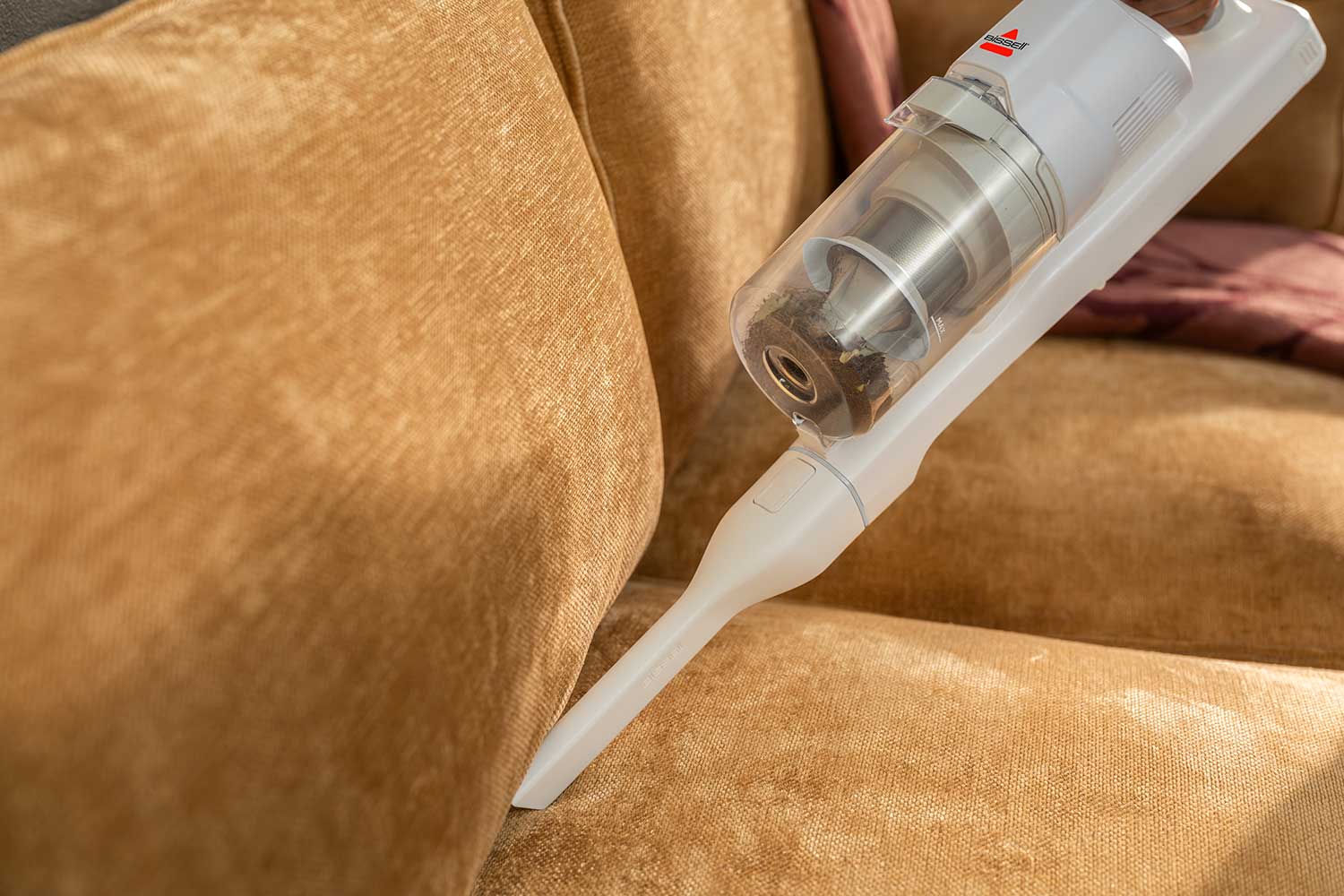
The BISSELL® PowerClean® Cordless stick vacuum is well-suited to leather couch maintenance. Follow these steps each time you vacuum:
Step 1: Remove all cushions. Set them aside so you can access the full frame, base, and seating area underneath.
Step 2: Start at the top. Begin with the top of the backrest and work downward. On all leather surfaces, use the Combination Dusting Brush & Crevice Tool with the brush component slid down – this creates a soft surface that lifts debris gently without contacting or marking the leather directly.
Step 3: Work the seams and crevices. Vacuum along all seams, tufted areas, and the gap between the backrest and seat base. Keep the brush component side down whenever the tool touches leather.
Step 4: Clean the frame and base. Continue down to the seat base and sides of the frame, maintaining the same soft-brush technique on all leather surfaces.
Step 5: Vacuum the cushions. Vacuum all sides of each cushion using the Combination Dusting Brush & Crevice Tool with the brush component down on leather-covered surfaces.
Step 6: Vacuum any fabric areas. Some couches have fabric panels under the seat or along the base. The brush component is not needed on fabric – for these areas, you can use the crevice tool or the FurFinder™ Upholstery Tool.
Pro tip: Always work top to bottom, starting with the backrest and moving down so dirt, dust, and crumbs fall to the next level you clean.
Deep clean a leather couch
When does a leather couch need a deep clean
A deep clean is warranted when routine wiping no longer removes visible grime, when the leather surface feels tacky or looks dull, or after any significant spill or accident. For most households, a thorough deep clean of a leather couch every two to three months is sufficient. These tips are for finished leather only. Do not wet clean aniline, semi-aniline, suede, or nubuck.
Deep cleaning process
Step 1: Prepare the couch surface
Remove all cushions and vacuum the entire couch thoroughly using the BISSELL® PowerClean® Cordless stick vacuum following the step-by-step vacuuming method above. No wet cleaning should begin until all loose debris has been removed.
Step 2: Apply leather cleaner safely
Apply leather cleaner to a soft microfiber cloth and work in small sections using light, even pressure. Never saturate the cloth or allow liquid to pool on the surface of the leather. For tufted or textured areas, use a soft-bristled detailing brush to work the cleaner gently into the texture without scrubbing.
Step 3: Wipe and buff the leather
Follow immediately with a clean, dry microfiber cloth to remove residue from each section before moving to the next. Buff lightly in the direction of the grain. Avoid leaving any cleaner on the surface longer than the product directions recommend.
Step 4: Allow proper drying time
Allow the couch to air dry completely in a well-ventilated room before applying conditioner or returning cushions to the frame. Keep the couch out of direct sunlight during drying – heat causes uneven moisture evaporation and can cause the leather to stiffen or crack.
Pro tip: Leather picks up skin and hair oils, pet dander, and fine dust even when you don’t see it. Make it a part of your cleaning routine to wipe down the leather couch with a dry microfiber cloth. It only takes a few minutes but can help reduce buildup down the line.
Remove common stains from a leather couch
Then address by stain type:
- Food and drink spills. Blot immediately to absorb as much liquid as possible, then wipe gently with a cloth lightly dampened with a pH-balanced leather cleaner. For dried food residue, soften the area first with a barely damp cloth before attempting to lift the stain.
- Ink and dye transfer. Use a cleaner specifically formulated for ink removal on leather, applied sparingly with a cotton swab, working from the outer edge inward. For significant or set-in ink stains, seek out professional cleaners who specialize in cleaning leather.
- Grease and oil. Blot the excess immediately – do not rub. Allow the remaining residue to dry naturally; in many cases the surface coating on the leather will prevent full absorption and the stain can be gently wiped away once dry. If the stain persists, apply a small amount of pH-balanced leather cleaner and blot carefully.
- Pet accidents and odors. Remove solids immediately and blot liquids thoroughly. Clean the area with a leather-safe cleaner, working from the outside in. For persistent odors that have soaked into the cushion padding, professional cleaning may be necessary.
Condition and protect your leather couch
Why leather needs conditioning and how to choose a conditioner
Leather is a natural material that loses moisture over time – accelerated by heat, sunlight, and regular use. Without conditioning, it gradually dries out, stiffens, and develops surface cracks. Conditioning replenishes the oils that keep leather supple and helps maintain the protective surface coating. Use a conditioner specifically formulated for furniture leather, and confirm it is compatible with your leather type – finished and unfinished leathers require different products. Always spot test before applying to the full surface.
Conditioning is recommended for finished leather. Aniline and semi-aniline leather may benefit from conditioning but require products specifically formulated for unfinished leather – check manufacturer guidelines. Do not condition suede or nubuck.
How often to condition your leather couch
For most leather couches, conditioning every six to 12 months is sufficient. Couches in sunny rooms, dry climates, or high-traffic areas benefit from conditioning every three to six months. If the leather feels dry, looks dull, or has developed fine surface lines, it may need conditioning.
Apply leather conditioner step by step
Apply a small amount of conditioner to a soft, white microfiber cloth and work it into the leather in gentle, circular motions across the full surface. Allow it to absorb for the time specified on the product label, then buff away any excess with a new clean, dry cloth. Ideally, try to keep people and pets off the couch for several hours to let the conditioner seep in.
Ongoing maintenance and care
Daily and weekly care habits
A quick wipe-down with a dry microfiber cloth once or twice a week removes surface dust and oils before they build up. Vacuum crevices and seams weekly with the BISSELL® PowerClean® Cordless Stick Vacuum using the Dusting Brush & Crevice Tool. Address spills the moment they happen.
Prevent fading, drying, and environmental damage
Keep leather conditioned on schedule – set a reminder in your calendar to pop up every six months – and position the couch away from direct sunlight and heat sources like radiators or fireplaces. Use window coverings during peak sun hours if the couch sits near a window. Aim to keep the room at a stable, moderate humidity level – low humidity accelerates drying and cracking, while high humidity can make fibers swell, contort the couch shape, and encourage mold growth in natural or unfinished leather.
Deal with scratches and minor damage
Light surface scratches on finished leather can often be minimized by rubbing gently with a clean fingertip – the warmth and natural oils can help the scratch blend in. Leather repair kits are available for deeper scratches and scuffs. For significant damage, a professional leather repair service will produce more reliable results.
Mistakes to avoid when cleaning a leather couch
Not using cleaners marked for leather. Use only leather-specific cleaners. All-purpose household cleaners and chemical-based products damage leather's surface coating and accelerate cracking.
Over-wetting the surface. Apply all liquids sparingly via a cloth – never directly onto the leather. Excess moisture leads to stiffening, warping, and potential mold or mildew growth.
Scrubbing with abrasive sponges, stiff brushes, or a rotating brush roll. Use only soft, appropriate tools. The BISSELL® PowerClean® Cordless Stick Vacuum dusting brush and crevice too - used with the brush component - delivers a gentle touch on leather.
When to call a professional leather cleaner
Deep-set stains that haven't responded to careful at-home cleaning, significant mold growth, large areas of cracking or peeling, or damage to aniline or unfinished leather are all good reasons to bring in a professional. Look for a service that specializes in leather furniture specifically – not general upholstery cleaning – and ask about their experience with your leather type before booking.
FAQs
What cleaning products are safe to use on a leather couch?
A cleaner specifically labeled for leather furniture is the right choice. Always avoid harsh chemicals such as bleach, ammonia, and alcohol-based cleaners – these dry out and discolor leather over time. Before using any product, check the manufacturer’s instructions and test it on a small, hidden area first to confirm it doesn't cause damage.
How often should I clean and condition a leather couch?
- Weekly: Dust or lightly wipe the surface, followed by vacuuming crevices and seams
- Every two to three months: Do a more thorough cleaning of your leather couch
- Six to 12 months: Condition the leather (or every three to six months if the couch is in a sunny, dry, or high-traffic area)
What is the best way to clean a leather couch at home?
Remove the cushions, then wipe the surface of the couch with a dry microfiber cloth to remove dust and oils.
Then, vacuum thoroughly using the BISSELL® PowerClean® Cordless stick vacuum with its built-in crevice tool and Combination Dusting Brush & Crevice Tool to remove loose debris. Next, wipe the surface with a soft microfiber cloth lightly dampened with a pH-balanced leather cleaner, working in sections from top to bottom.
Follow with a dry cloth to remove residue and allow the leather to air dry fully.
Finish with a leather conditioner applied per the product directions.
Can I use a vacuum on a leather couch, and if so, how?
Yes you can vacuum a leather couch when you use the right attachments and test them first. Use the built-in crevice tool on the BISSELL® PowerClean® Cordless Stick Vacuum for seams, cushion gaps, and tight areas, and the Combination Dusting Brush & Crevice Tool – with the brush component slid down – on all leather surfaces. Never use a rotating brush roll on leather, which can scuff and mark the surface.