How to Clean Kitchen Floors: Remove Spills, Crumbs, and Sticky Messes
Kitchen floors require more frequent cleaning than any other room in your home. Kitchens are high-traffic areas where crumbs accumulate, liquids spill, and grease splatters – plus there’s lots of foot traffic throughout the day. Regular cleaning keeps your kitchen looking fresh and maintains a sanitary environment for food preparation.
“I have two products that I use regularly to maintain my kitchen floors; a stick vac and a wet dry vac,” says Joe Perry, Director of Engineering at BISSELL. “Having a routine and the right tools to clean the kitchen area will keep a hygienic place for food prep, help prevent pests like insects or rodents by removing potential food sources, and keep kitchen messes from getting tracked into other areas of the home.”
In this guide, learn the most effective methods for cleaning kitchen floors, from emergency spill cleanup to weekly deep cleaning routines.
Jump to cleaning instructions
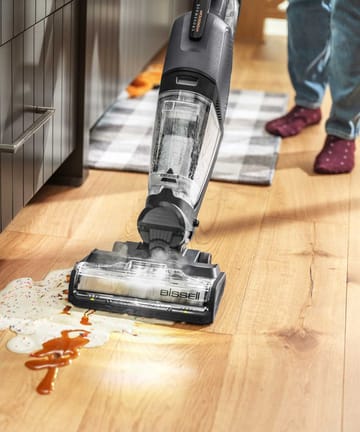
Quick Answer: Best way to clean kitchen floors
The most effective kitchen floor cleaning routine uses three approaches: clean spills immediately with a wet dry vac, which handles both liquid and solid messes; vacuum daily with a cordless stick vacuum to remove crumbs and debris; and deep clean weekly by vacuuming and mopping simultaneously with a wet dry vac. This cleaning recipe prevents buildup, removes sticky residues, and maintains a sanitary surface.
“In my house, we make it a point to stay in front of the cleaning tasks in the kitchen to keep it a hygienic place where food prep is taking place,” says Joe, who has been with BISSELL for more than a decade. “Because cooking with oils and greases can cause messes to build up and become more difficult to remove, it’s doubly important to keep kitchen floors clean.”
What you need to clean kitchen floors
For immediate spill cleanup and weekly deep cleaning:
- The CrossWave HydroSteam® Plus Wet Dry Vac Exclusive Bundle, which can handle wet and dry messes and comes with extra cleaning formulas and accessories
- Appropriate floor cleaning solution – we recommend PET Multi-Surface with Febreze Formula for fast pick-ups and Hard Floor Sanitize Formula for weekly cleaning
For daily maintenance:
- The PowerClean® Cordless Stick Vacuum, which quickly removes crumbs
Why kitchen floors get dirty so quickly
Kitchen floors accumulate a greater variety of debris than almost any other surface in your home. In addition to normal dust and debris, food particles settle into corners and grout lines while liquid spills often become sticky spots. Foot traffic spreads crumbs across the floor and cooking grease can create an invisible film that dulls floor surfaces and makes them feel slippery or tacky.
“The kitchen floor sees the largest diversity of messes when compared to the other rooms in my house,” says Joe, who’s contributed to the engineering of dozens of BISSELL® products. “Our kitchen has an entryway from the outside, food prep and eating situations, pet feeding, and just everyday traffic with two kids and their friends. We get everything from grass clippings and sand and leaves, to soda pop, yogurt, pet food, cooking oil build up, and spills from food prep.”
Like other rooms in the house, different types of kitchen messes require different cleaning approaches. Quick-response cleaning prevents spills from setting and staining. Regular light cleaning removes daily accumulation. And deeper weekly cleaning addresses the buildup that occurs despite daily efforts.
How to clean up kitchen floor spills immediately
Can you clean both wet and dry spills with one tool?
Yes—a wet dry vac like the CrossWave® HydroSteam® Plus Wet Dry Vac handles both liquid spills, such as juice or marinara sauce, as well as dry debris like cereal or flour, without switching tools. It can also quickly remove messes made up of liquids and solids, such as a dropped bowl of chicken noodle soup. This, plus built-in HydroSteam® Technology, which helps remove sticky messes, makes it ideal for quick kitchen spill response.
A CrossWave® machine is always handy for spill cleanup at Joe’s house: “A common one for us is to drop the yogurt container from the refrigerator and have it splatter everywhere,” he says. “When this happens, I grab our wet dry vac and go over the spill a few times and feel confident I am not going to have a sticky floor – something you may get if you just wipe the mess up.”
Method: Immediate spill cleanup with wet dry vac
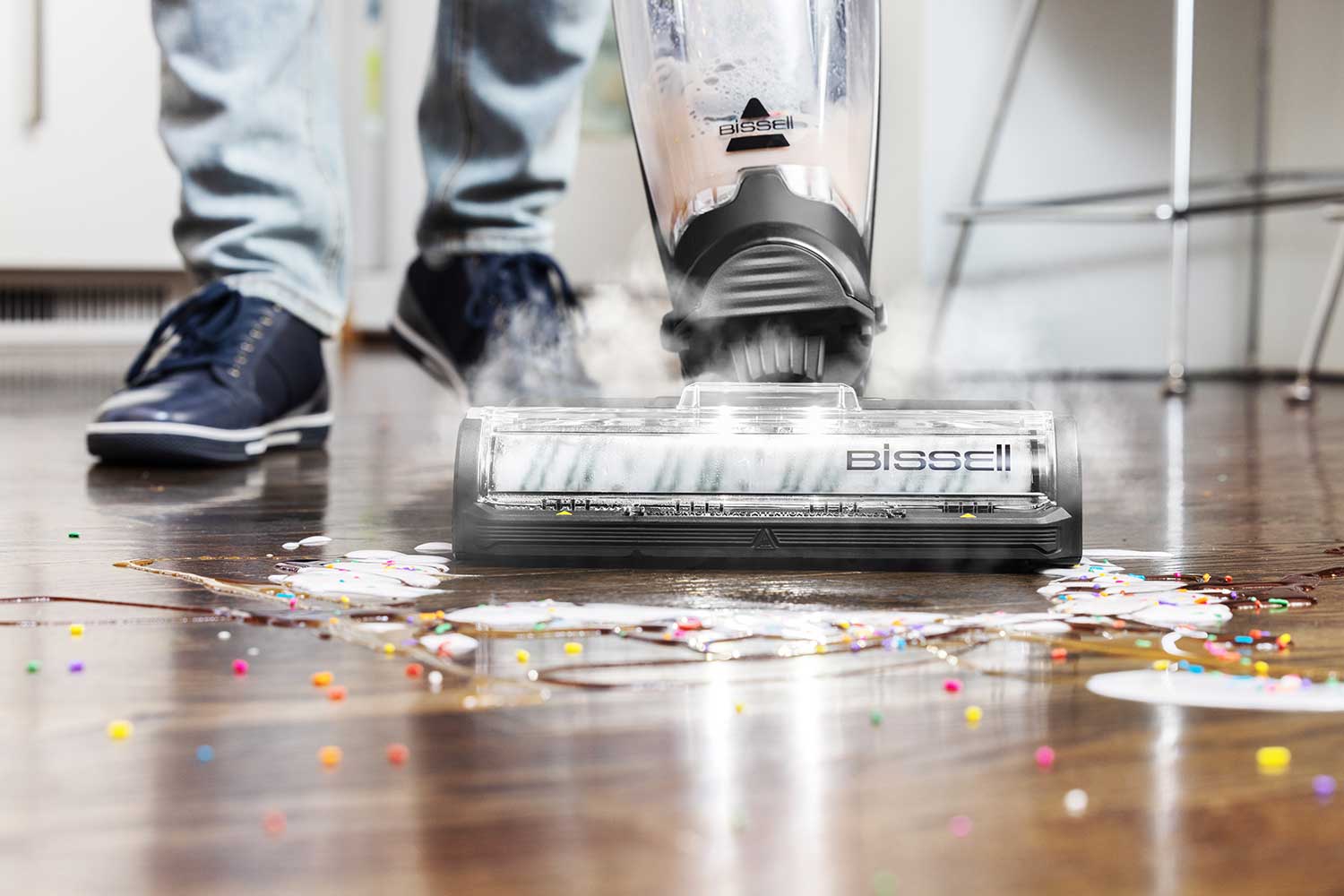
CrossWave® machines can be used on area rugs, too, if you find yours needs a quick refresh.
Materials needed
- The CrossWave® HydroSteam® wet dry vac, which can be used for wet or dry spills
- Floor cleaning solution, such as PET Multi-Surface with Febreze Formula, which will clean hard floors and refresh area rugs
Safe for use on:
- Tile Floors
- Sealed hardwood
- Laminate
- Vinyl
- Linoleum
- Area rugs
Not recommended for:
- Unsealed wood floors
Step 1: Prep the machine
Fill the clean tank of your CrossWave® HydroSteam® wet dry vac warm water and PET Multi-Surface with Febreze Formula, using the guidelines on the tank to get the correct amount of each.
Step 2: Pick a cleaning mode
Select a cleaning mode based on the mess and surface type.
- Hard Floor Mode cleans everyday messes on sealed hard floors such as spilled cereal and milk and cooking splatters.
- SteamWash™ Mode powers through tough, stuck-on messes on hard floors.
- Area Rug Mode refreshes area rugs and cleans dry messes such as crumbs and dirt.
Step 3: Clean the spill
Begin at the outer edges of the spill and work inward to prevent spreading. Make slow, overlapping passes with the CrossWave® HydroSteam® wet dry vac. The machine will simultaneously vacuum up wet and dry debris and mop the surface.
For sticky spills: Select SteamWash™ Mode. Make multiple passes over the area, allowing the HydroSteam® Technology and cleaning solution to break down and remove the residue.
Step 4: Clean out machine and air dry floor
Your floor may have a thin layer of cleaning solution on it, but the floor will be dry within minutes. To get the machine ready for next time, empty the dirty water tank and run the Clean Out Cycle on your machine. Your brush roll can also be stored on your tray to encourage faster dry time.
Pro tip: Keep your CrossWave® HydroSteam® wet dry vac near the kitchen so you can respond to spills fast.
How to maintain kitchen floors between deep cleanings
Should you vacuum or mop kitchen floors daily?
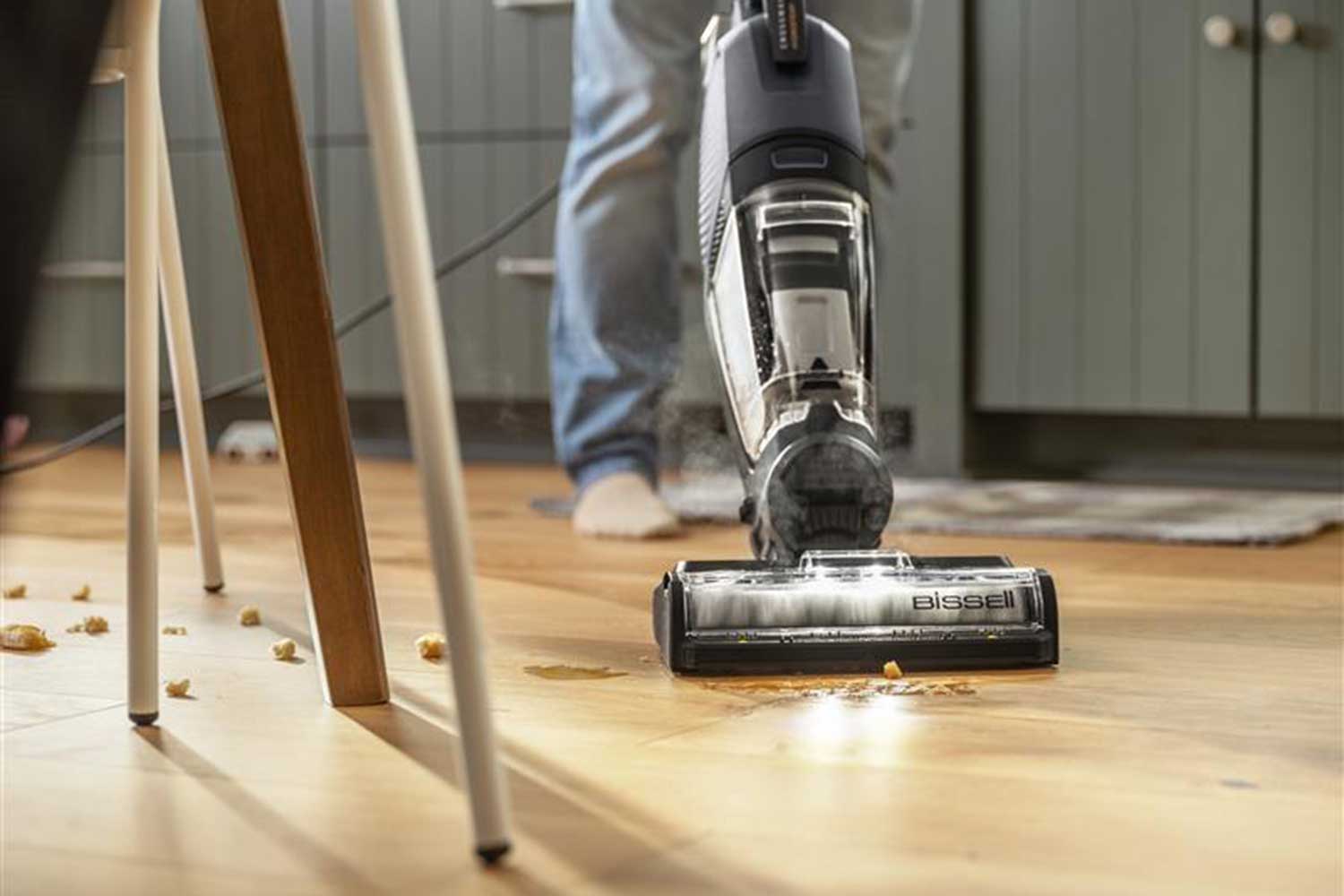
“Throughout the week I am cleaning up pet food, outside-in debris like leaves and sand, food crumbs from the kids, and pet hair,” says Joe, who finds the machine headlights particularly helpful during this task. “I may do a targeted area cleaning or the whole area cleaning every day and the PowerClean® vacuum makes this really easy to do.”
Method: Quick daily vacuum for crumbs and debris
Daily foot traffic and meal preparation create a steady supply of crumbs, dust, and small debris. Vacuum kitchen floors daily – a task that should take just 2 to 3 minutes – prevents light debris from being stepped on or scattered around.
Materials needed
- The PowerClean® Cordless Stick Vacuum , which has LED headlights and the best suction performance in a cordless stick vacuum priced under $2001
Safe for use on:
- All hard floor types
- Area rugs
- Carpet
Step 1: Clear the floor
Remove stools, small rugs, and other lightweight furnishings that limit access the entire floor surface.
Step 2: Start vacuuming from the farthest corner
Begin vacuuming from the corner farthest from your kitchen exit and work your way toward the doorway. This prevents you from walking over freshly cleaned areas.
Step 3: Use steady, overlapping passes
Move the PowerClean® Cordless Stick Vacuum in straight lines, moving at a slow to moderate speed and overlapping each pass slightly to ensure complete coverage. The cordless design makes it easy to maneuver around kitchen islands and under tables.
Step 4: Focus on high-traffic zones
Pay extra attention to areas in front of the sink, stove, and refrigerator, where crumbs and debris tend to concentrate. Use the vacuum's slim profile to reach under lower cabinets and around appliance bases where crumbs often collect.
Pro tip: Keep your PowerClean® Cordless Stick Vacuum charged and stored in or near the kitchen for quick daily cleanups. A two-minute vacuum after meal prep can prevent buildup that’s harder to clean later.
How to deep clean kitchen floors weekly
Can you vacuum and mop at the same time?
Yes. A wet dry vac like the CrossWave® HydroSteam® machine can vacuum and mop simultaneously, cutting cleaning steps in half. The machine picks up debris while washing and scrubbing the floor in a single pass, making it more efficient than traditional vacuum-then-mop methods.
“Once a week I like to use my CrossWave® wet dry vacuum to mop the floors to get that deeper level of wet clean to remove more of the stuck on and difficult messes that go unnoticed, like oil splatter from cooking or small drips and spills,” says Joe, whose engineering expertise has played a role in technologies ranging from HEPA filtration to headlights. “The benefit of the wet dry vacuum is that I don’t have to vacuum first so it isn’t much extra work to get that deeper clean.”
Method: Weekly vacuum and mop with wet dry vac
Even with daily maintenance, kitchen floors need a thorough weekly cleaning to remove dust, debris, and sticky residues.. The CrossWave® HydroSteam® wet dry vac combines vacuuming and mopping in one step for efficient deep cleaning. When used with BISSELL® Hard Floor Sanitize Formula, you can kills 99.9% of bacteria2 on sealed hard floors in only 5 minutes.
Materials needed
- The CrossWave® HydroSteam® Plus Wet Dry Vac, which includes bonus cleaning formulas and accessories when purchased on BISSELL.com as an exclusive bundle.
- An appropriate floor cleaning solution – we recommend Hard Floor Sanitize Formula Hard Floor Sanitize Formula, which will help keep your hard kitchen floors free of unwanted bacteria.
Step 1: Prep the floor
Remove any items from the floor, including trash cans, pet bowls, and floor mats.
Step 2: Prep the CrossWave® HydroSteam® wet dry vac
Fill the clean water tank with warm water and the recommended amount of BISSELL® cleaning solution, using the guidelines on the clean tank to ensure you have the correct amount of each.
Step 3: Pick a cleaning mode
Select a cleaning mode based on the mess level of your kitchen floor, and whether or not you are cleaning an area rug.
- Hard Floor Mode vacuums and mops everyday messes up from sealed hard floors, including spilled cereal and milk and cooking splatters.
- SteamWash™ Mode removes debris and powers through tough, stuck-on messes on hard floors with the power of HydroSteam® Technology.
- Area Rug Mode refreshes area rugs and cleans dry messes such as crumbs and dirt. (SteamWash™ Mode can also be used to refresh area rugs.)
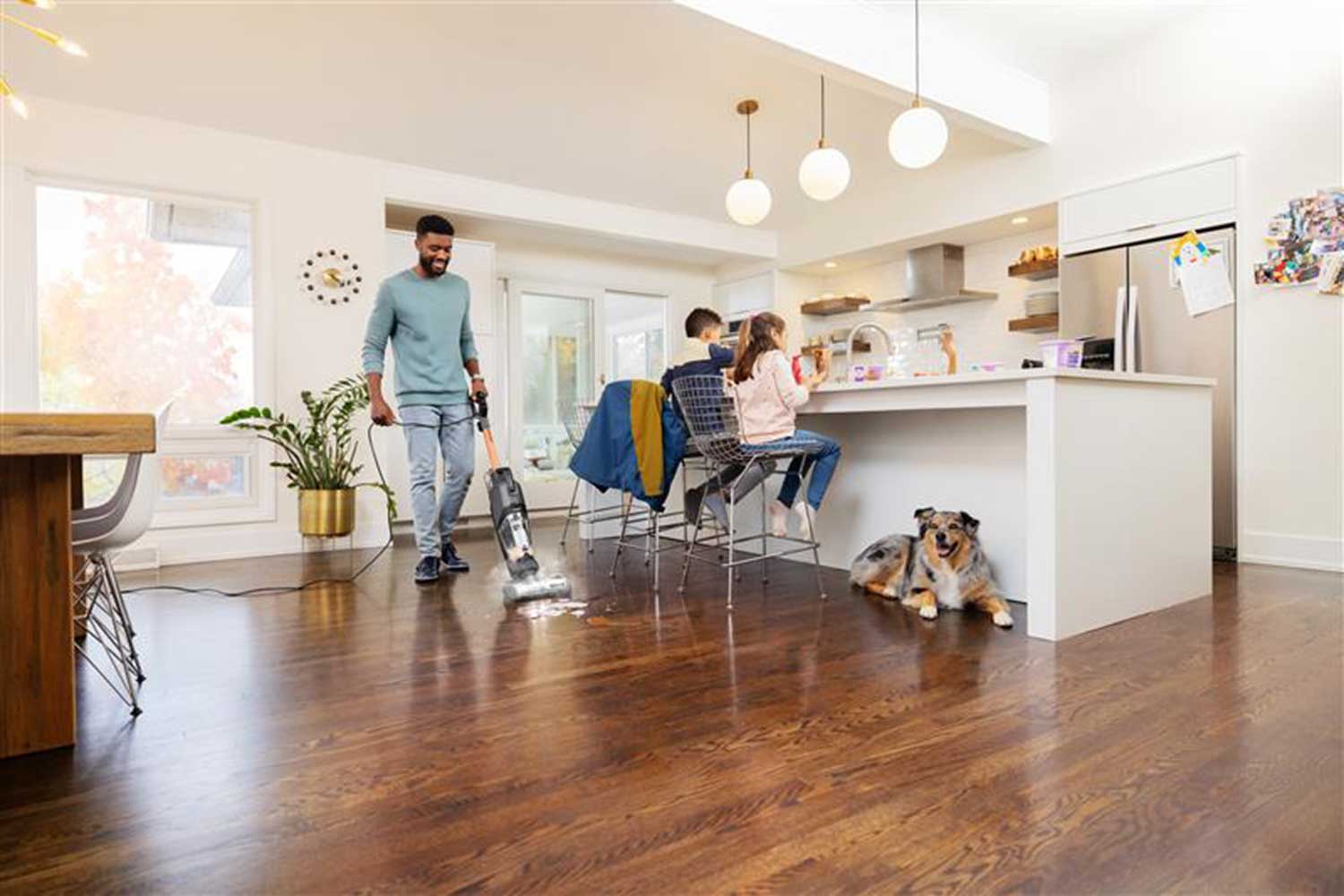
Step 4: Begin cleaning
Step 5: Focus on problem areas
For sticky spots, make multiple passes, moving slowly to give the cleaning solution and brush roll time to loosen and remove residue. Be sure to clean corners and along the baseboards, where crumbs tend to accumulate.
Step 6: Allow to dry
Your floor may look shiny and wet, but there should be only a little cleaning solution left and it should dry within moments. (To get the full effectiveness of the Hard Floor Sanitize formula, the floor should be visibly wet for at least 5 minutes.) To be ready to go next time, empty the machine’s dirty water tank and run the Clean Out Cycle on your machine. This helps maintain the machine's performance and prevents odor-causing residue from building in your machine.
Wet dry vac vs. traditional mop: which cleans kitchen floors better?
Wet dry vacs offer several advantages over traditional mopping for kitchen floors. A wet dry vac like the CrossWave® HydroSteam® wet dry vac vacuums and mops simultaneously, eliminating the need to sweep first. It also eliminates the need for elbow grease you need with traditional mopping. Better still, CrossWave® machines use fresh cleaning solution continuously rather than pushing dirty water around like a traditional mop. Wet dry vacs also leave floors drier than traditional mops, reducing slip hazards and allowing faster return to normal use.
Traditional mopping requires more steps (sweep, fill bucket, mop, change dirty water, rinse) and often leaves floors wetter for longer periods, which may make it unsafe for certain flooring types, such as laminate.
For regular kitchen floor maintenance, wet dry vacs provide more thorough, efficient cleaning with less effort.
How to prevent kitchen floor buildup
The best way to keep kitchen floors clean is to prevent heavy buildup through consistent cleaning and quick responses to messes.
Daily prevention tips
Address spills immediately: Keep your CrossWave® HydroSteam® wet dry vac accessible so you can clean up spills as soon as they happen, before they dry or spread.
Vacuum daily or after cooking: A quick pass with the PowerClean® Cordless Stick Vacuum after meal prep and dinner takes just minutes and prevents crumb accumulation.
Use floor mats strategically: Place washable mats in front of the sink and stove to catch splashes and spills.
Remove outdoor shoes: Encourage family members to remove shoes at the door to reduce dirt and debris tracked into the home.
Wipe up grease promptly: Cooking grease that lands on floors becomes slippery and attracts dirt. Clean it immediately with your CrossWave® HydroSteam® wet dry vac.
Deep clean weekly: Pick a day to fully clean your kitchen floor with your CrossWave® HydroSteam® wet dry vac, staying ahead of buildup.
Clean under appliances monthly: Move portable appliances and vacuum underneath to prevent dust and food particle accumulation. Or, attach a crevice tool to your vacuum.
Frequently asked questions
What is the best way to clean kitchen floors?
The most effective method combines three approaches: immediate spill cleanup with a CrossWave® HydroSteam® wet dry vac, daily vacuuming with a PowerClean® cordless stick vac , and weekly deep cleaning with the CrossWave® HydroSteam® wet dry vac to vacuum and mop simultaneously. This routine prevents buildup and maintains sanitary surfaces.
What is the fastest way to clean a kitchen floor spill?
Use a wet dry vac like the CrossWave® HydroSteam® machine, which handles both wet and dry spills without requiring separate sweeping and mopping steps. In just a few passes you can fully remove the mess and mop the floor clean. (Be sure to empty the dirty tank and run the Clean Out Cycle on your machine after each use.)
Should I vacuum or mop my kitchen floor first?
With a traditional cleaning routine, always vacuum first to remove loose debris before mopping. However, a wet dry vac like the CrossWave® HydroSteam® combo vacuum and mop eliminates this dilemma by vacuuming and mopping simultaneously in one pass.
How often should I clean my kitchen floor?
Clean spills as soon as they happen. Vacuum daily or after meal preparation, which should only take 2 to 3 minutes. Deep clean by vacuuming and mopping weekly. High-traffic kitchens or homes with children and pets may benefit from twice-weekly deep cleaning.
Can I use a wet dry vac on all types of kitchen floor spills?
Yes, the CrossWave® HydroSteam® wet dry vac effectively handles both wet spills (juice, milk, sauces, water) and dry debris (cereal, flour, crumbs, coffee grounds) on sealed hard floor surfaces, as well as a mix of the two, such as cereal and milk. Always use appropriate BISSELL® cleaning solutions for your specific floor type and mess. For example, if you dropped raw chicken on the floor, consider using a cleaning formula that sanitizes, such as BISSELL® Hard Floor Sanitize Formula.
What removes sticky residue from kitchen floors?
Wet dry vacs with cleaning solution work best for loosening and removing sticky residues. The CrossWave® HydroSteam® wet dry vac uses HydroSteam® Technology, a rotating brush roll, and cleaning solution to break down sticky spots while simultaneously vacuuming up the loosened residue. Make multiple slow passes over sticky areas for best results.
Do I need different tools for different types of kitchen floors?
The same cleaning tools work across most kitchen floor types. You can safely use a stick vac on all flooring types, and a wet dry vac can be used to clean tile, sealed hardwood, laminate, vinyl, and linoleum. Before your first clean, verify your specific floor is compatible and use an appropriate cleaning solution. Avoid wet cleaning on unsealed wood floors.
FEBREZE is used under license from The Procter and Gamble Company or its affiliates. ¹Per ASTM F558 Sealed Suction. 2Kills 99.9% of Enterobacter aerogenes (ATCC 13408), Staphylococcus aureus (ATCC 6538)(Staph) and Salmonella enterica (ATCC 10708).
This is a carousel. Use the Next and Previous buttons to navigate between slides, or use the scrollbar to scroll through content.